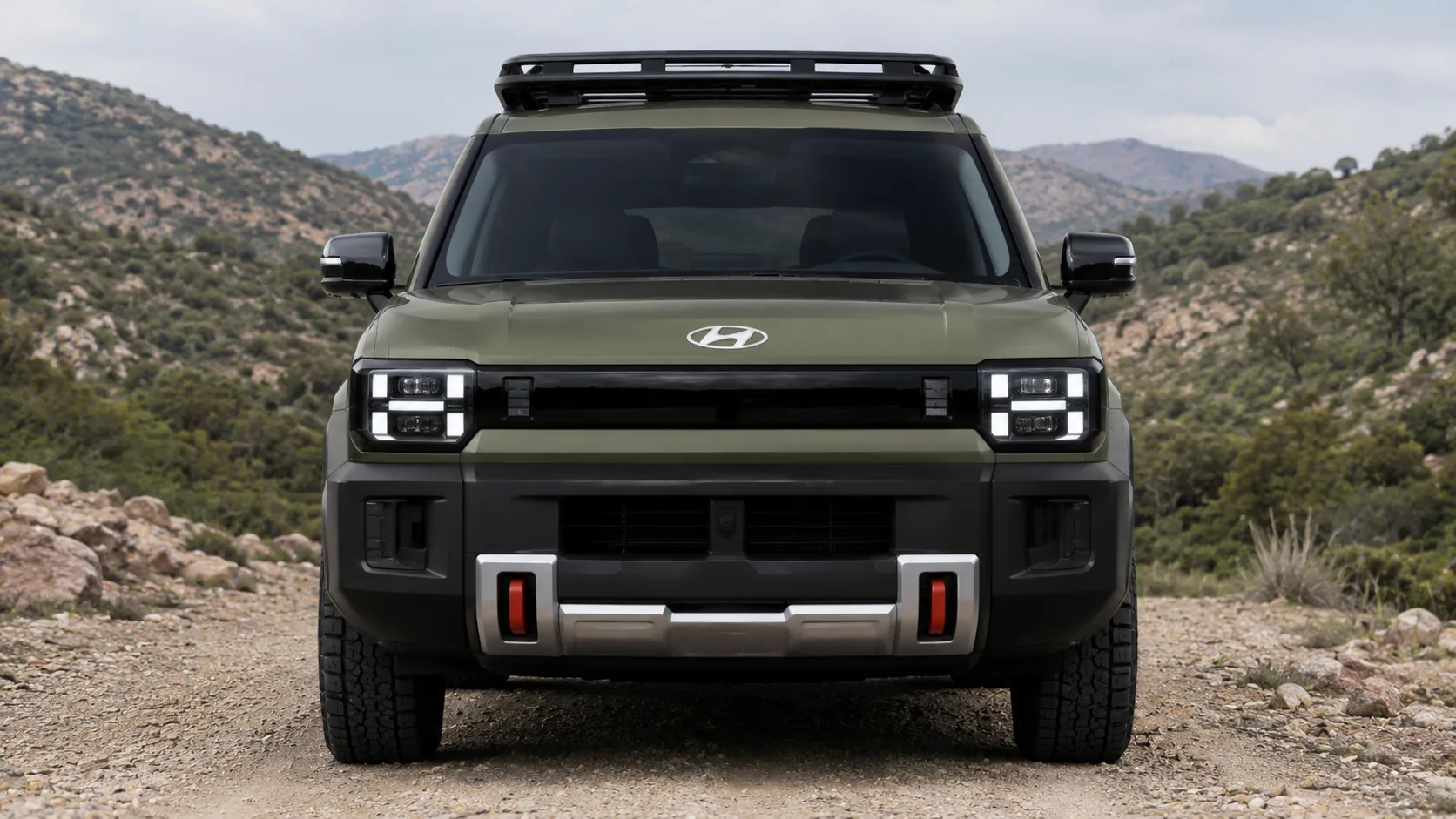
Hyundai seems to be quietly laying the groundwork for something different. The company has filed a design patent for the Hyundai Boulder SUV in India, and while that alone doesn’t guarantee a local launch, it’s the kind of move automakers usually make when they want to keep their options open in a market as important as India. The Boulder first appeared as a concept vehicle earlier this year, and this patent filing has now reignited talk about whether Hyundai is finally ready to build a proper, hardcore off-road SUV for Indian roads and trails.
A Completely Different Design Language
Hyundai’s current SUV lineup in India, the Exter, Creta, Alcazar, and Tucson, is built around comfort, city driving, and family-friendly practicality. The Boulder throws that formula out the window.
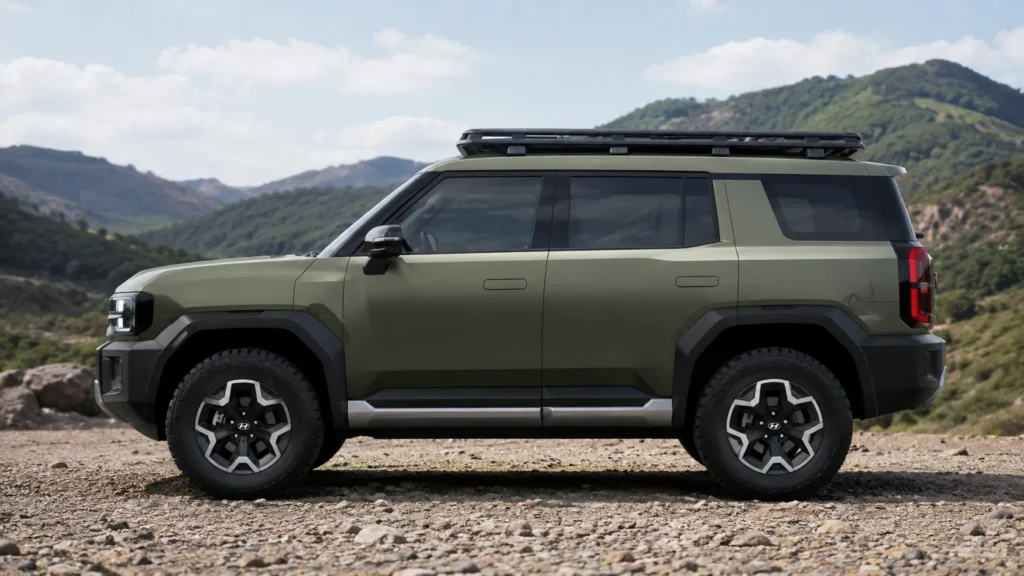
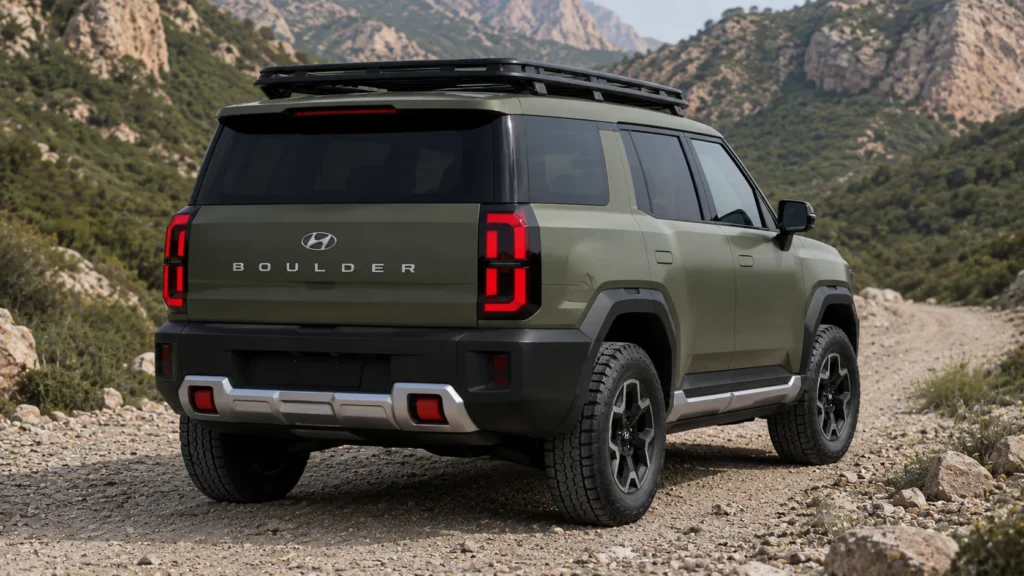
Patent images reveal a boxy, upright silhouette that draws heavily from classic off-roader design rather than the smooth, crossover-style shapes Hyundai is known for. Interestingly, the production-intent design stays fairly close to the original concept, with only a handful of practical tweaks made along the way.
Some of the standout styling elements include:
- Boxy, muscular SUV proportions
- High ground clearance
- Chunky wheel arch cladding
- Large all-terrain tyres
- Front and rear skid plates
- A reworked front bumper
- A roof-mounted luggage carrier
- Sharp, vertical lighting elements
Together, these details make it obvious who Hyundai is targeting: adventure-seekers and off-road enthusiasts, not urban SUV buyers looking for a soft-roader. The design also fits neatly into Hyundai’s new “Art of Steel” design philosophy, first introduced with the Boulder concept.
Why a Patent Filing Doesn’t Mean an India Launch Is Confirmed
It’s worth being clear about one thing here: a design patent is not a launch announcement. Automakers routinely file design patents in various countries simply to protect their intellectual property, even when there’s no firm plan to sell that particular model there.
That said, companies don’t usually bother patenting a design in a market unless they see some future potential in it. So while Hyundai hasn’t given any official word on an India launch timeline for the Boulder, this filing does suggest the door is still open.
Could the Boulder Be Hyundai’s First Body-on-Frame SUV?
Hyundai hasn’t released technical specifications for the Boulder yet, but several industry reports suggest it could turn out to be the brand’s first body-on-frame SUV, a genuine departure from the monocoque construction used across its current India lineup.
This distinction actually matters a lot for off-road capability. A ladder-frame chassis is inherently tougher and better suited to absorbing the stress of rough terrain compared to a unibody structure, which is why traditional off-roaders and pickup-based SUVs still rely on it.
Expected mechanical highlights, based on early reports, include:
- Body-on-frame (ladder-frame) architecture
- Independent suspension setup
- All-wheel-drive system
- Locking differential capability
- Dedicated off-road driving modes
If these features make it to production, the Boulder would sit in a completely different category from anything Hyundai currently sells in India.
A Flexible Approach to Powertrains
One of the more interesting angles here is powertrain flexibility. Reports indicate Hyundai is developing the Boulder with an all-electric variant in mind, which fits the brand’s broader push toward electrification. At the same time, an internal-combustion version also appears to be in the pipeline for markets where petrol and diesel engines still dominate demand.
For India specifically, that could translate into:
- A turbo-petrol engine option
- A diesel engine, depending on market demand
- A fully electric variant
- All-wheel drive is standard or optional equipment
It’s important to note that Hyundai hasn’t confirmed any specific engine, battery, or drivetrain details yet; these are informed expectations based on industry reporting, not official specifications.
Who Would the Boulder Compete With in India?
Should Hyundai actually bring the Boulder to India, it would step into a segment that’s been growing steadily, with lifestyle and hardcore off-road SUVs. Here’s how it could stack up against likely rivals:
| Rival SUV | Category | Known For |
|---|---|---|
| Mahindra Thar Roxx | Lifestyle off-roader | Rugged design, AWD, strong off-road credentials |
| Mahindra Scorpio-N | Body-on-frame SUV | Powerful engines, spacious cabin |
| Force Gurkha | Hardcore off-roader | Ladder-frame toughness, serious trail capability |
| Toyota Hilux | Pickup-based SUV | Durability, high payload, and towing capacity |
| Isuzu V-Cross | Pickup-based SUV | Reliability, diesel performance |
Depending on how Hyundai positions and prices the Boulder, it could also draw in buyers looking for something more premium and tech-loaded than the traditional off-roaders on this list.
What This Means for Hyundai’s SUV Strategy
Hyundai already fields one of India’s strongest SUV lineups, spanning everything from the compact Exter to the flagship Tucson. What it doesn’t have is a genuine ladder-frame off-roader, and that’s precisely the gap the Boulder could fill.
Beyond sales numbers, a vehicle like this would also do wonders for Hyundai’s brand image, proving the company can build something far tougher and more capable than the urban crossovers it’s best known for. Whether Hyundai eventually goes with a petrol, diesel, electric, or dual-powertrain strategy, the Boulder has real potential to become a flagship adventure SUV if and when it reaches production.
Wrapping Up
The Hyundai Boulder SUV design patent filing in India is a promising sign for enthusiasts who’ve long wanted Hyundai to build a serious off-roader. It doesn’t confirm a launch, but it does show Hyundai is protecting its options in one of the world’s fastest-growing SUV markets. Between its rugged styling, expected body-on-frame platform, all-wheel-drive hardware, and possible electric variant, the Boulder could end up being one of the most distinctive adventure SUVs Hyundai has ever built if it makes the jump from patent office to production line.