
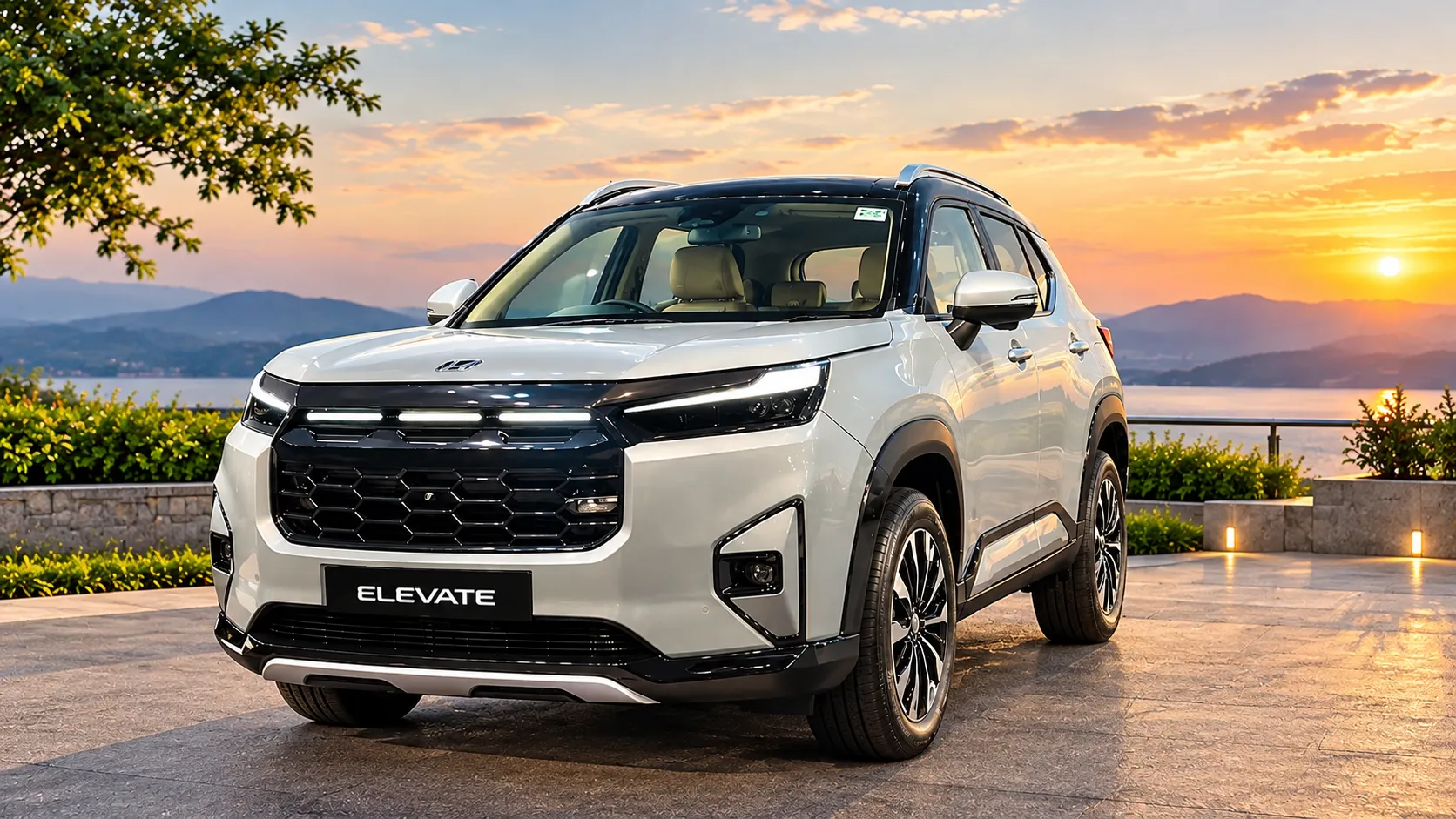
Honda has taken a measured approach with the Elevate facelift, refining its popular midsize SUV rather than introducing a completely redesigned model. The updated Elevate retains the core design, platform, and mechanical package of the existing SUV, while receiving selected changes aimed at keeping it competitive in a segment that is becoming increasingly crowded.
The decision may appear conservative at first, but it reflects Honda’s understanding of what works for the Elevate. Since its introduction, the SUV has built its appeal around a straightforward design, comfortable cabin, naturally aspirated petrol engine, and mature driving characteristics. Instead of changing these fundamentals, Honda has focused on improving the areas that matter most to everyday buyers.
Subtle Exterior Changes
The facelift keeps the familiar upright proportions of the Elevate, but Honda has introduced styling updates to give the SUV a fresher look. Changes to the front-end treatment, grille, and bumper details help distinguish the facelift from the outgoing version without making the vehicle look radically different.
The overall silhouette remains recognisable, which is likely to appeal to existing Honda customers who prefer a clean and understated SUV design. The Elevate also continues to avoid the overly aggressive styling approach adopted by some newer rivals.
Cabin Gets More Attention
Inside, the facelift is expected to bring more noticeable improvements. Honda has worked on equipment and convenience features to make the cabin feel more modern and competitive.
The SUV continues to offer a practical dashboard layout and a relatively spacious interior. Depending on the variant, buyers can expect updated infotainment and connected-car features, along with improvements to comfort and convenience equipment.
Honda’s focus appears to be on improving usability rather than filling the cabin with features simply for the sake of a longer equipment list.
Familiar Petrol Powertrain
One of the biggest points of continuity is the powertrain. The Elevate continues with Honda’s 1.5-litre naturally aspirated petrol engine, paired with manual and automatic transmission options.
This approach is increasingly unusual as rivals move towards turbo-petrol, strong-hybrid and electric powertrains. However, Honda’s naturally aspirated engine remains attractive to buyers looking for predictable performance and relatively straightforward ownership.
The facelift therefore feels more like an evolution than a transformation.
Why Honda Has Played It Safe
The Elevate facelift’s limited changes could actually be part of Honda’s strategy. The midsize SUV segment is extremely competitive, but changing the vehicle too aggressively could increase costs without necessarily improving the ownership experience.
Honda has instead concentrated on keeping the Elevate familiar while addressing equipment and styling expectations. This could help the SUV remain relevant without losing the qualities that have defined it.
For buyers looking for a sensible, comfortable and easy-to-live-with midsize SUV, the updated Elevate continues to make a strong case. It may not be the most dramatically changed facelift in the segment, but Honda appears to believe that evolution is enough — and that could prove to be the right decision.
Also Read :- Honda Elevate Variants Explained: Features & Differences