
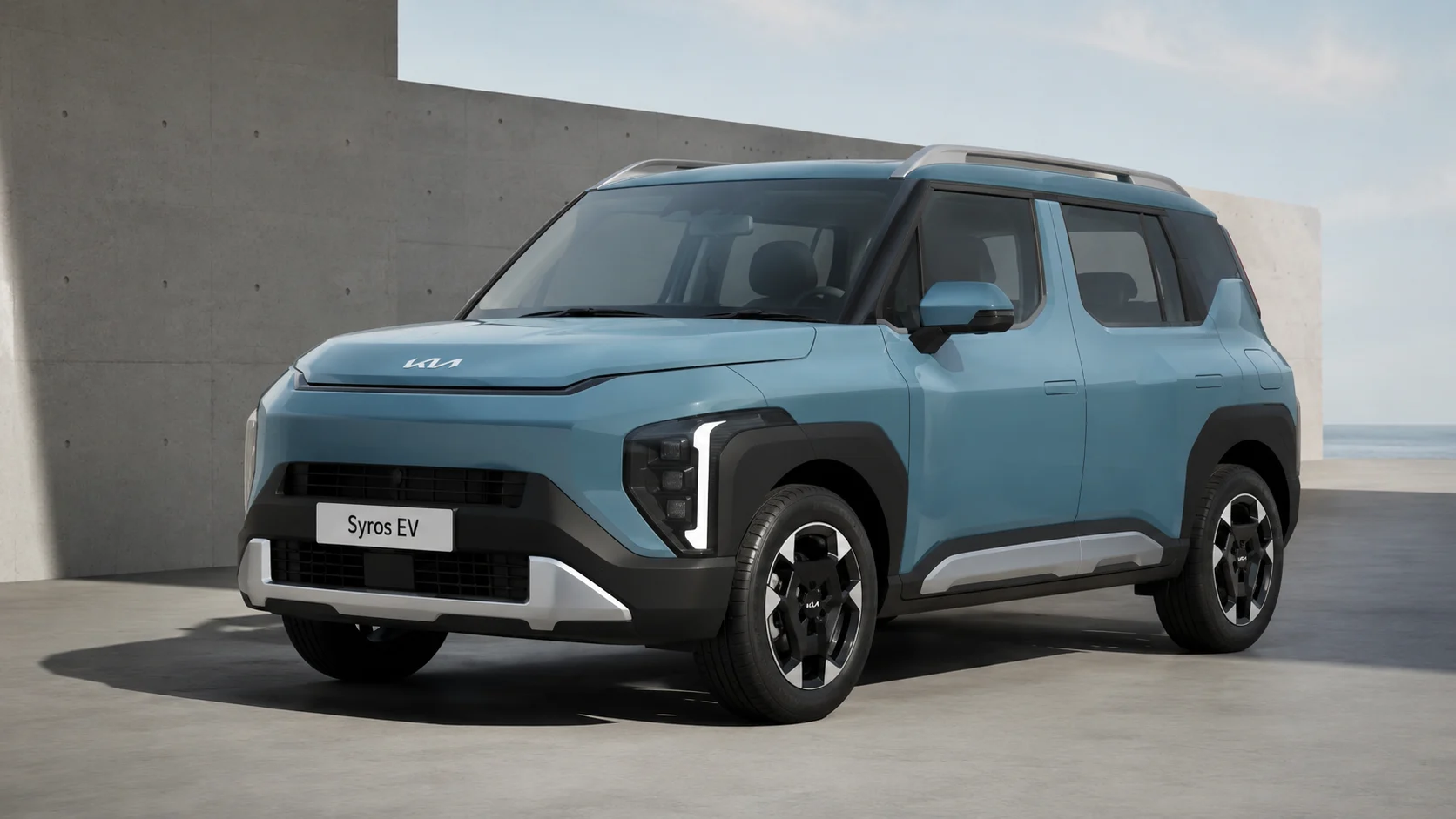
Kia has finally pulled the covers off its most affordable electric SUV yet. The Kia Syros EV price in India starts at ₹13.49 lakh (ex-showroom), and the car officially went on sale on July 23, 2026, with deliveries set to begin from July 30. This makes the Syros EV Kia’s second locally-built electric model after the Carens Clavis EV, and its first genuine shot at the mass-market EV space currently ruled by the Tata Nexon EV and Mahindra XUV 3XO EV.
If you’ve been waiting for a Kia EV that doesn’t cost a small fortune, this is probably the one to watch.
Kia Syros EV Launch Date and Price
Kia had been teasing this launch for weeks, and after unofficial bookings and leaks through early and mid-July, the wraps finally came off on July 23, 2026. The Kia Syros EV launch date in India now puts it right in the middle of the festive-season EV rush, and Kia clearly wants to capture buyers before rivals sharpen their own pricing.
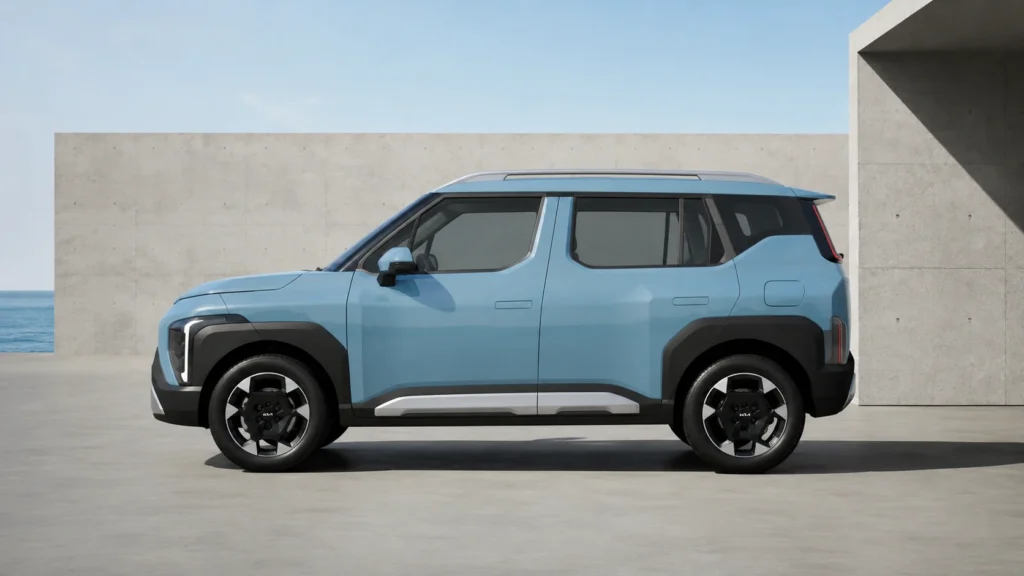
The entry-level 42kWh variant starts at ₹13.49 lakh, while the larger 51.4kWh Extended Range (ER) version begins at ₹16.99 lakh. The range-topping X-Line ER tops out at ₹19.99 lakh, ex-showroom. Kia is also offering a Battery-as-a-Service (BaaS) plan, which brings the entry price down to roughly ₹7.99 lakh plus a per-kilometre battery rental charge, a smart way to make the car more approachable for first-time EV buyers.
Variant-wise Price (Ex-Showroom)
| Variant | Battery Pack | Price (Ex-Showroom) |
|---|---|---|
| HTK | 42 kWh | ₹13.49 lakh |
| HTK+ | 42 kWh | ₹15 lakh (approx.) |
| HTX | 42 kWh | ₹16 lakh (approx.) |
| HTK+ ER | 51.4 kWh | ₹16.99 lakh |
| HTX ER | 51.4 kWh | ₹18 lakh (approx.) |
| HTX+ ER | 51.4 kWh | ₹19 lakh (approx.) |
| X-Line ER | 51.4 kWh | ₹19.99 lakh |
Prices are ex-showroom and may vary slightly by city and ongoing offers.
Battery, Motor and Range
Kia is offering two battery choices here, and the difference isn’t just about range; it changes how the car feels to drive too.
The base 42kWh pack is paired with a front motor producing around 135hp, good for an ARAI-claimed range of up to 443km. Step up to the 51.4kWh Extended Range pack, and power climbs to about 171hp, with peak torque of 255 N · m on both versions. Kia claims this bigger battery can go up to 526km on a single charge, a genuinely strong number in this price bracket.
Charging is handled through 100kW DC fast charging, which Kia says takes the battery from 10% to 80% in about 39 minutes. For home charging, an 11kW AC charger is supported, ideal for topping up overnight.
What You Get on the Inside
Kia hasn’t held back on features, even on a car this affordable. The cabin gets dual 12.3-inch digital displays, wireless Android Auto and Apple CarPlay, ventilated front seats, a panoramic sunroof (on higher trims), a wireless charger, and a premium sound system. There’s also a digital key, Vehicle-to-Load (V2L) support, so you can power external devices, and over-the-air software updates.
Safety Kit
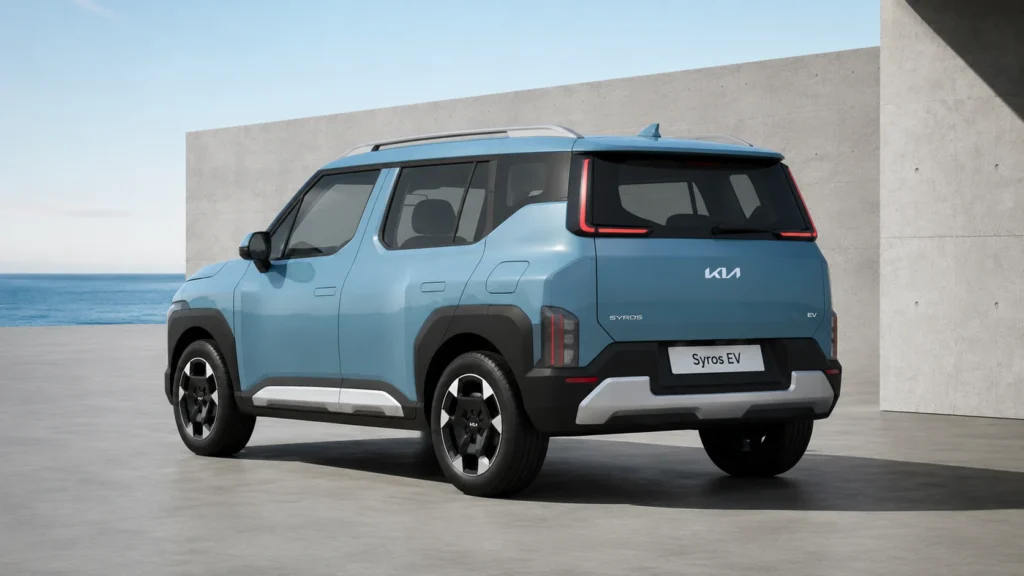
On the safety front, the Syros EV comes with six airbags, Electronic Stability Control, Hill Start Assist, a 360-degree camera, and front-rear parking sensors as standard across most trims. Higher variants add Level-2 ADAS, which includes Adaptive Cruise Control, Lane Keep Assist, Autonomous Emergency Braking, and Blind Spot Monitoring features you’d usually expect only in cars priced well above this segment.
Who Should Consider It
If you’re cross-shopping the Tata Nexon EV, MG Windsor EV, or Mahindra XUV 3XO EV, the Syros EV deserves a serious look. It undercuts most rivals on the range figure, throws in a genuinely premium interior, and the BaaS option gives buyers a way to ease into EV ownership without the full upfront battery cost. Kia’s warranty and service network in India also adds a layer of confidence for anyone nervous about going electric for the first time.
With the Kia Syros EV price in India starting under ₹14 lakh and deliveries beginning July 30, 2026, this could well be the EV that finally makes Kia a serious contender in India’s compact electric SUV race.