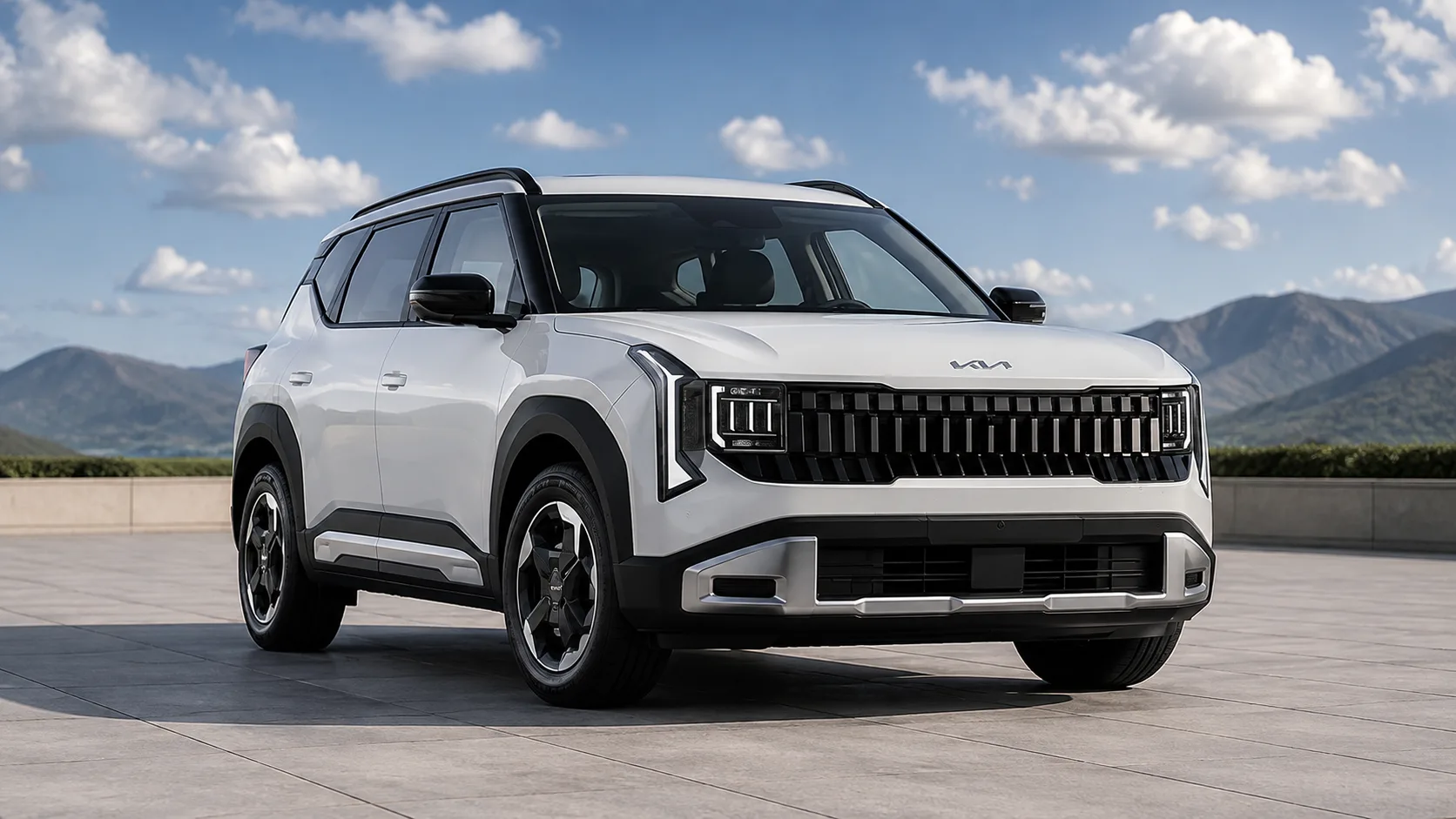
Kia has just pulled the wrapper off the China-spec Seltos, and if you’ve been eyeing the India-spec version launched earlier this year, there’s a fair bit here that might make you do a double-take. Yueda Kia, the brand’s joint venture partner in China, has given the new-generation Seltos a cabin that’s noticeably different from what Indian buyers get, and pre-bookings for it open on August 13, 2026.
Let’s start with the numbers, because they tell an interesting story. The China-spec Seltos measures 4,460 mm in length, 1,830 mm in width, and 1,640 mm in height, riding on a 2,690 mm wheelbase. On paper, that puts it in roughly the same size bracket as the India-spec car that arrived back in January. But step inside, and the differences become obvious.
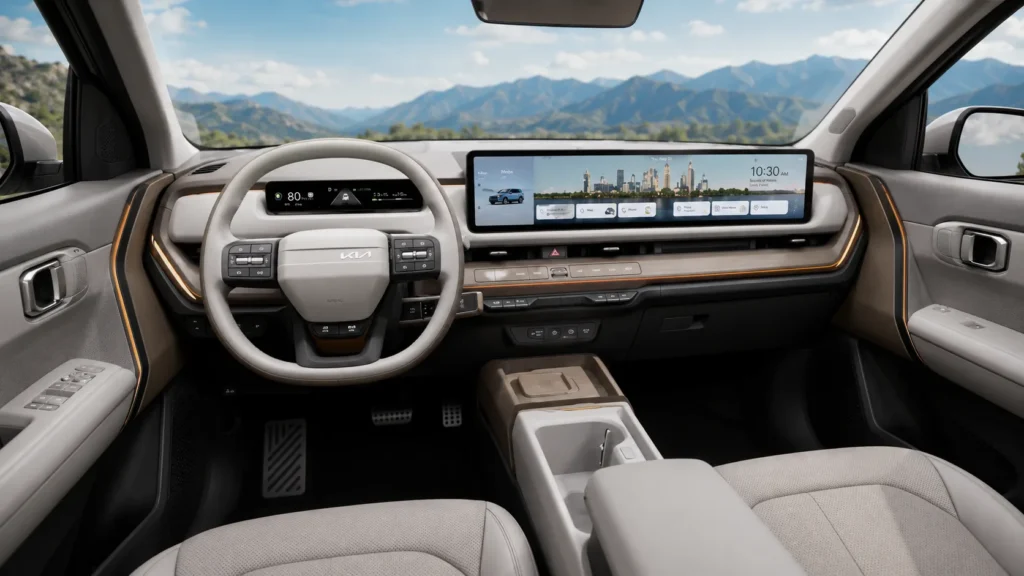
The standout change is the screen setup. Kia has fitted the Chinese Seltos with a massive 27-inch display, a size that dwarfs anything currently offered on the India-spec model. It’s the kind of touch that signals just how tech-focused the Chinese SUV market has become, where buyers increasingly expect car cabins to feel like an extension of their smartphones.
Space is another area where the China model pulls ahead. Boot capacity comes in at 483 litres, compared to 447 litres on the India-spec Seltos. Fold down the rear seats, and that number jumps to a genuinely useful 1,454 litres, giving Chinese buyers a lot more room for luggage or weekend gear.
Under the hood, the China-spec car sticks with two petrol engine options, including a 1.5-litre turbo unit producing 200 PS paired with an 8-speed automatic gearbox. That’s a fair bit punchier than what’s currently on offer in India, where the Seltos continues with its familiar 1.5-litre petrol, turbo-petrol, and diesel lineup.
None of this is entirely surprising once you think about how global carmakers actually operate. The Seltos may share a common platform worldwide, but Kia tailors the cabin, tech, and even boot space to match what each market actually wants. Chinese buyers have shown a strong appetite for big screens and connected features, so that’s where Kia has focused its energy locally. Indian buyers, on the other hand, tend to prioritise value, fuel efficiency, and a broader mix of powertrains, including diesel, which explains why the two cars feel like distant cousins rather than twins despite sharing a name and a basic silhouette.

Whether India eventually gets a similar screen upgrade remains to be seen. Kia has a history of trickling global-spec features down to India over time, especially once a model settles into its lifecycle. For now, though, if you’re comparing brochures side by side, the China-spec Seltos clearly has a more premium, tech-heavy cabin, while the India-spec car leans more practical.
Also See :- Kia Sorento India Launch: What to Expect on September 4