
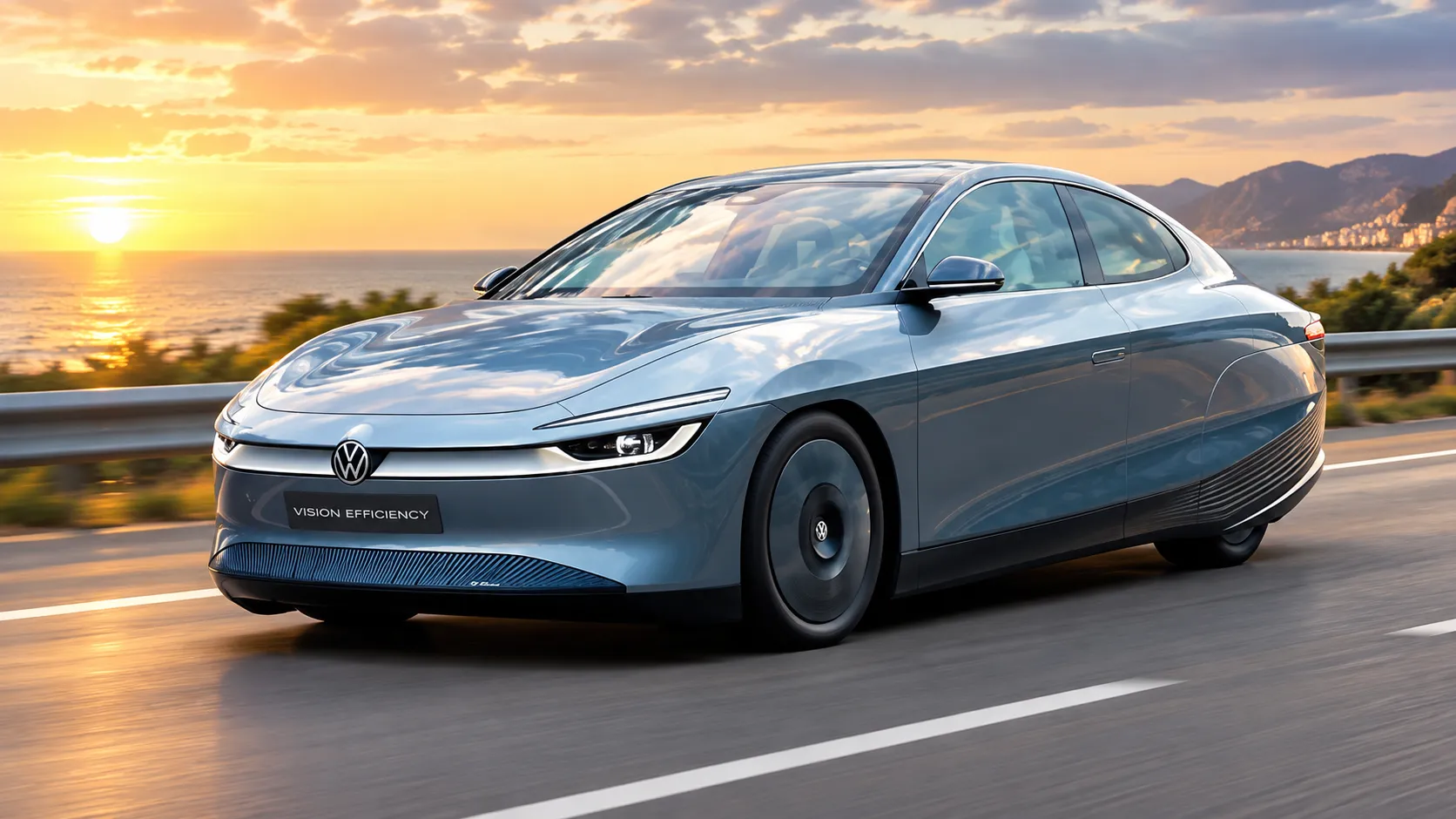
Volkswagen has introduced its Mission Efficiency Concept as a technology-focused study aimed at exploring how future vehicles can deliver greater efficiency without compromising everyday usability. The concept highlights the German automaker’s approach to reducing energy consumption while improving the overall driving experience.
Rather than being presented simply as a new production model, the Mission Efficiency Concept serves as a showcase for technologies and engineering ideas that could influence Volkswagen’s future vehicles. Its central philosophy is straightforward: make better use of available energy and enable the vehicle to travel farther with less consumption.
Efficiency Takes Centre Stage
The concept focuses on several areas that can have a direct impact on vehicle efficiency. Aerodynamics, weight management, drivetrain optimisation and energy management are among the key areas being explored. Reducing aerodynamic resistance is particularly important for electric vehicles because it can help lower energy consumption, especially at higher speeds.
Volkswagen is also looking at how different vehicle systems can work together more efficiently. Instead of treating the powertrain, aerodynamics and thermal management as separate elements, the Mission Efficiency approach aims to optimise the complete vehicle.
For electric vehicles, this approach could become increasingly important as manufacturers work to improve real-world range without relying only on larger and heavier battery packs.
More Range Without Simply Adding Battery Capacity
One of the biggest challenges facing EV manufacturers is balancing driving range, vehicle weight, and cost. A larger battery can provide additional range, but it also adds weight and can increase the overall price of the vehicle.
Volkswagen’s efficiency-focused approach suggests another path. By reducing energy consumption, a vehicle can potentially achieve more kilometres from the same amount of stored energy. This can improve efficiency while helping manufacturers avoid continuously increasing battery sizes.
The benefits could extend beyond range. Lower energy consumption can also reduce charging requirements and improve the practicality of electric vehicles for customers who regularly travel longer distances.
Technology With Real-World Potential
The Mission Efficiency Concept is particularly relevant as Volkswagen continues to develop its next generation of vehicles. The company is investing heavily in electrification, software and new vehicle architectures, making efficiency an important part of its future product strategy.
While the concept itself should not be viewed as a direct preview of a production car, the technologies demonstrated through such studies can eventually find their way into future models. Improvements in aerodynamics, thermal efficiency, energy recovery and drivetrain performance could make upcoming Volkswagen vehicles more economical without requiring major changes to how customers use them.
What This Means for Future Volkswagen Models
The Mission Efficiency Concept reflects a broader shift in the automotive industry. As EV adoption grows, manufacturers are increasingly looking beyond battery capacity to improve range and efficiency.
Volkswagen’s approach is therefore less about building the biggest battery and more about making the entire vehicle work smarter. If these ideas are successfully transferred to production models, future Volkswagen cars could offer improved range, lower energy consumption and better overall efficiency.
For buyers, that could ultimately mean EVs that are not only capable of travelling farther, but are also more practical and economical to operate in everyday conditions.
Also Read :- Mahindra XUV 7XO 5 Star Bharat NCAP Crash Test