
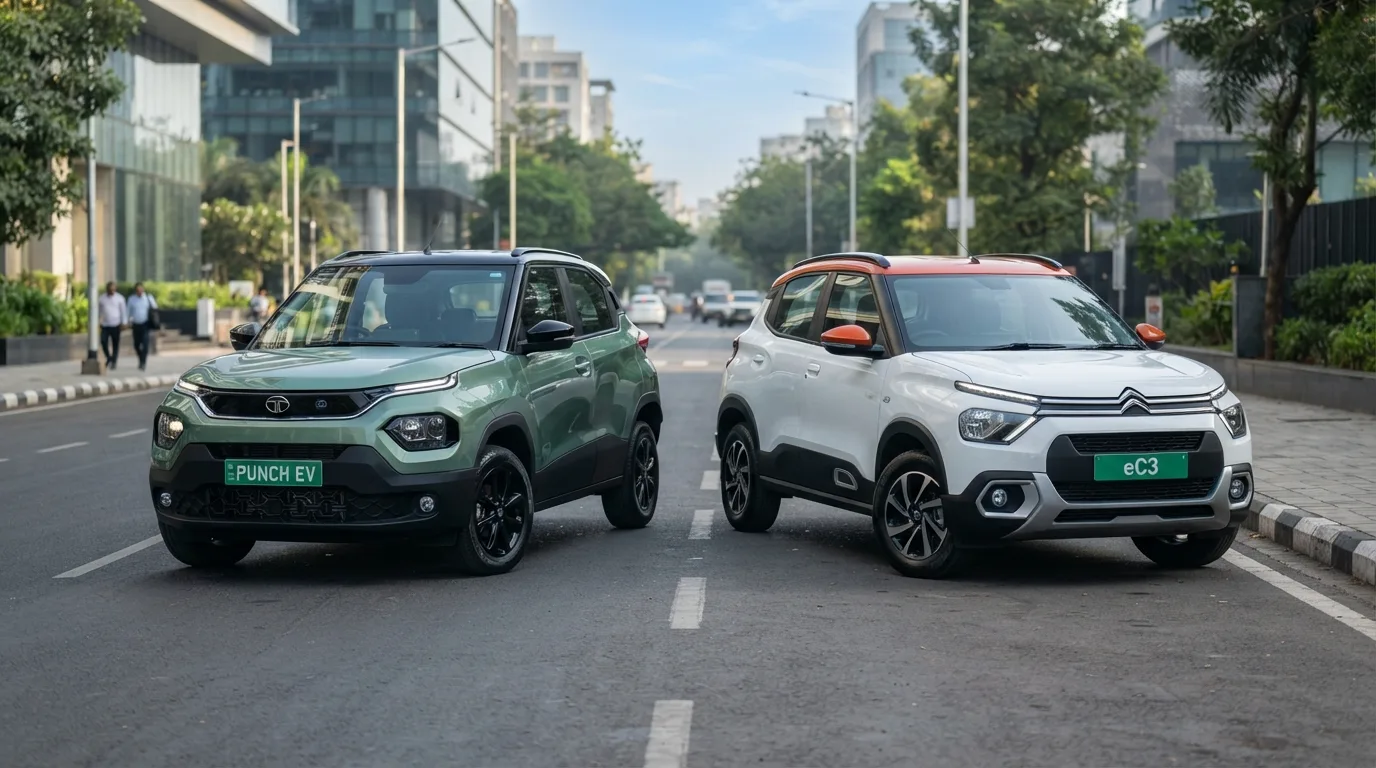
India’s affordable electric vehicle segment has come a long way in 2026, and two names keep popping up in every buyer’s shortlist: the Tata Punch EV and the Citroen eC3. Both cars promise the same basic pitch: no fuel bills, no tailpipe emissions, and an easy ownership experience, but they go about it in very different ways. The Punch EV leans into technology, performance, and safety, while the eC3 sticks to a simpler, comfort-first approach at a slightly higher price than before.
If you’re comparing a Tata Punch EV vs Citroen eC3 purchase this year, here’s an honest, updated look at how the two actually stack up, with every figure double-checked against the latest official specifications.
Price Comparison
Pricing has shifted for both cars recently, and it’s worth knowing the real numbers before you walk into a showroom.
| Model | Ex-Showroom Price Range (2026) |
|---|---|
| Tata Punch EV | ₹9.69 lakh – ₹12.59 lakh |
| Citroen eC3 (eC3X) | ₹11.99 lakh – ₹13.26 lakh |
The Punch EV actually undercuts the eC3 at the entry level by a fair margin, and it also offers a wider spread of variants, so buyers can pick a trim that matches both their budget and their feature wish list. Tata also offers a Battery-as-a-Service option that lowers the upfront price further, with a per-kilometre rental charge for the battery.
Battery, Motor & Driving Range
This is where the gap between the two cars is the widest.
| Specification | Tata Punch EV | Citroen eC3 |
|---|---|---|
| Battery Options | 30 kWh & 40 kWh | 29.2 kWh |
| Power | Up to 127 PS | 57 hp |
| ARAI Claimed Range | Up to 468 km | Around 320–325 km |
| Real-World Range (approx.) | 260–355 km | 200–260 km |
| DC Fast Charging (10/20–80%) | ~26 minutes | ~57 minutes |
The Punch EV now comes with two larger battery packs than before, a noticeably stronger motor, and roughly half the DC fast-charging time of the eC3. The eC3’s 29.2 kWh pack is still respectable for a car in this segment, but its charging speed and real-world range trail behind the Punch EV by a clear margin.
Performance
On the road, the difference is easy to feel. The Punch EV’s stronger motor makes it noticeably quicker off the line and more confident on highways, with multiple regenerative braking levels that let drivers fine-tune efficiency versus response.
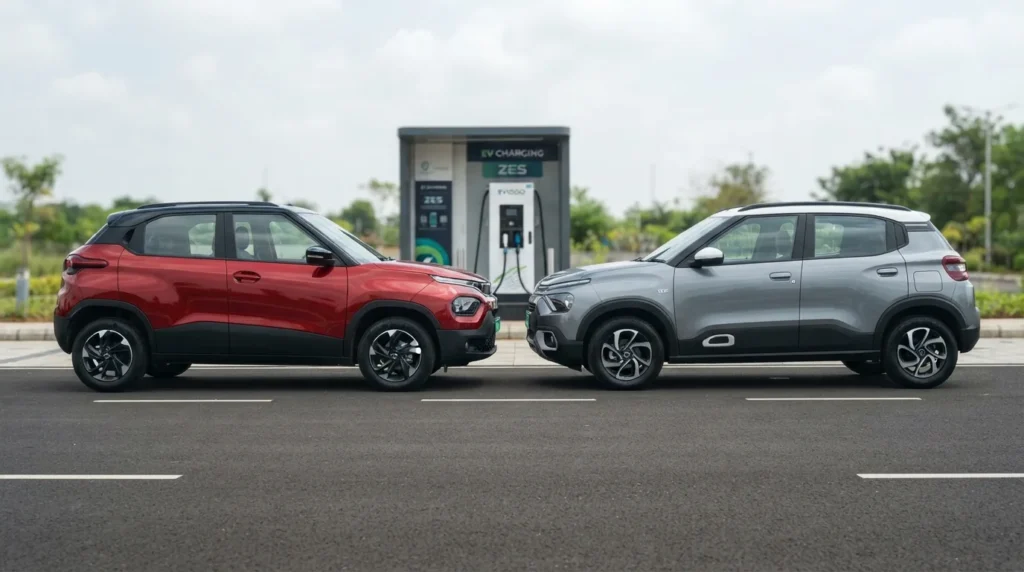
The eC3 is tuned for a calmer, city-first character. Acceleration is smooth at low speeds but tapers off quickly beyond 60 km/h, and its top speed is capped at around 107–108 km/h, which limits how comfortable it feels on long highway stretches.
Charging Convenience
Both cars support home AC charging and public DC fast charging, but the experience differs. The Punch EV’s 40 kWh variant can go from 20% to 80% in about 26 minutes on a suitable DC charger, while the eC3 needs roughly 57 minutes to go from 10% to 80%. On a standard 15A home socket, the eC3 takes around 10.5 hours for a full charge, since it doesn’t come with a dedicated wall box.
Interior & Features
Both cars now offer wireless smartphone connectivity and reasonably sized touchscreens, but the Punch EV packs in noticeably more equipment.
Tata Punch EV highlights: dual 10.25-inch displays, wireless Android Auto & Apple CarPlay, 360-degree camera, ventilated front seats, voice-assisted sunroof, wireless charger, and an air purifier with AQI display.
Citroen eC3 highlights: 10.25-inch touchscreen, 7-inch digital driver display, wireless phone charger, JBL 6-speaker audio, and a rear camera with wash-wipe on the updated eC3X.
Safety
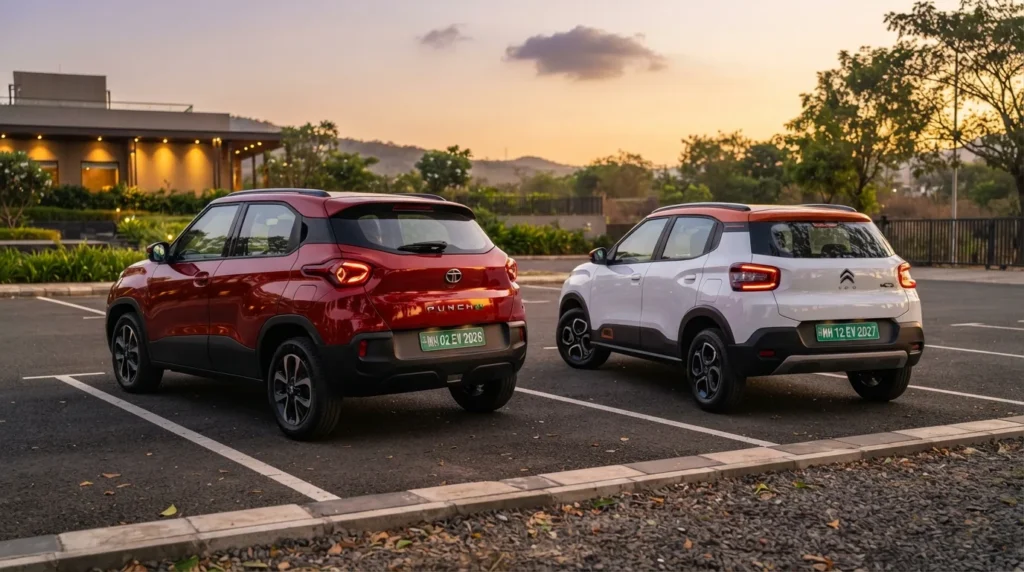
Safety is where buyers should pay close attention. The Punch EV comes with 6 airbags as standard, ESP, hill hold assist, a 360-degree camera, ISOFIX mounts, and a 5-star Bharat NCAP rating backed by more than 60 individual safety features across the range.
The eC3, meanwhile, previously scored zero stars in its 2024 Global NCAP crash test, though the updated eC3X now adds 6 airbags as standard along with ABS, EBD, and parking sensors. It’s worth noting that the newer eC3X hasn’t been independently crash-tested yet, so buyers should treat safety comparisons with some caution until fresh results are published.
Running Cost & Ownership
Tata’s EV service network is considerably larger across India, which matters for buyers outside the major metros. Spare parts availability and resale value currently favour the Punch EV as well. Citroen’s network has grown, but is still smaller in comparison.
Which One Should You Choose
For most buyers, the Tata Punch EV is the stronger all-around package in 2026, with a longer range, quicker charging, better safety scores, and a lower starting price. The Citroen eC3 still makes sense if ride comfort, a spacious cabin, and a distinct European look matter more to you than outright range or performance, but it now costs more than the Punch EV while offering less range and a smaller service footprint.
If budget and long-term ownership are the deciding factors, the Punch EV is the safer, more complete choice among today’s budget EVs in India.