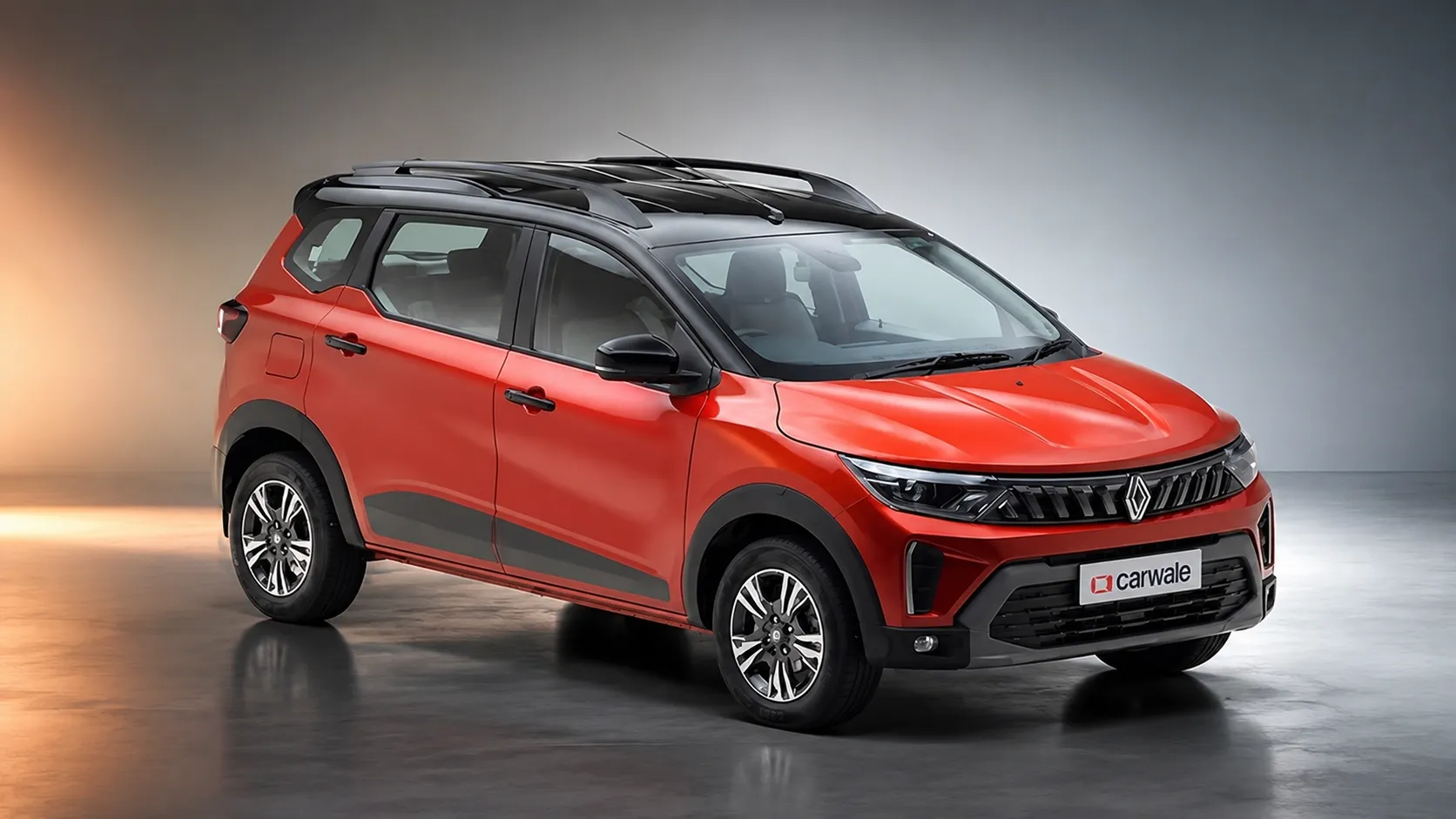
Renault is preparing to expand the Triber lineup in India with a more powerful turbo-petrol engine. The Renault Triber with a 1.0-litre turbo-petrol engine is expected to launch by the end of September, giving the seven-seat MPV a significant performance upgrade. The new engine could make the Triber more appealing to buyers looking for better highway performance without moving to a larger and more expensive MPV.
Renault Triber Set to Get a Turbo-Petrol Engine
The Triber has traditionally been positioned as an affordable and practical seven-seater, with its compact dimensions, flexible seating arrangement and relatively accessible pricing being its major strengths. However, its naturally aspirated petrol engine has not been known for strong performance, particularly when the vehicle is fully loaded.
The introduction of a turbocharged petrol engine could address this limitation. While Renault has not yet revealed the complete specifications, the upcoming powertrain is expected to offer stronger torque and improved acceleration compared with the existing naturally aspirated unit.
The launch is reportedly planned for September-end, although the exact date and variant details are yet to be officially announced.
More Power Could Improve Highway Performance
The biggest advantage of the new 1.0-litre turbo-petrol engine is expected to be its additional torque. Turbocharging can provide stronger low- and mid-range performance, which should be useful when carrying several passengers or overtaking on highways.
The current Triber is primarily aimed at buyers who prioritise practicality and affordability. A turbo-petrol version could broaden its appeal by adding a more enthusiastic driving experience while retaining the compact footprint that makes the MPV easy to drive in city traffic.
Renault could also tune the engine for a balance between performance and fuel efficiency, although official mileage figures will only be known closer to the launch.
Transmission Options Still Awaited
Another important detail is the transmission. Renault could offer the turbo-petrol engine with a manual gearbox, while an automatic option could make the new version more attractive to urban buyers.
The company has not yet confirmed the exact gearbox combinations or whether the turbo engine will be available across multiple variants. More information is expected ahead of the launch.
Could Get Cosmetic and Feature Updates
Along with the new engine, Renault may introduce selected updates to the Triber’s equipment or styling. However, there is currently no confirmation that the turbo version will receive a major design overhaul.
The Triber already offers features aimed at family buyers, including a flexible seating configuration, touchscreen infotainment system, digital instrumentation and multiple storage areas. Renault could use the new powertrain as an opportunity to strengthen the overall package rather than making extensive changes.
Renault Triber Turbo: Expected Positioning
The turbo-petrol Triber could sit above the existing naturally aspirated versions in Renault’s lineup. This means buyers should expect a price premium for the additional performance and technology.
Its biggest competition will continue to come from other compact and affordable family cars, although the Triber’s seven-seat configuration gives it a distinct advantage. A stronger engine could make it an even more convincing option for families who frequently travel with multiple passengers.
Launch Expected by September End
The Renault Triber 1.0 turbo-petrol is expected to arrive by the end of September, potentially marking one of the most important updates to the MPV’s powertrain lineup. However, Renault is yet to officially disclose the engine’s output, transmission choices, variant availability and pricing.
If the turbo engine delivers noticeably better performance without a major increase in price, the updated Triber could become a more compelling choice for buyers seeking an affordable seven-seater with stronger highway capabilities. More confirmed details should emerge as Renault gets closer to the launch.
Also Read :- New Hyundai EV 2026: 500km+ Range, Level 2 ADAS