
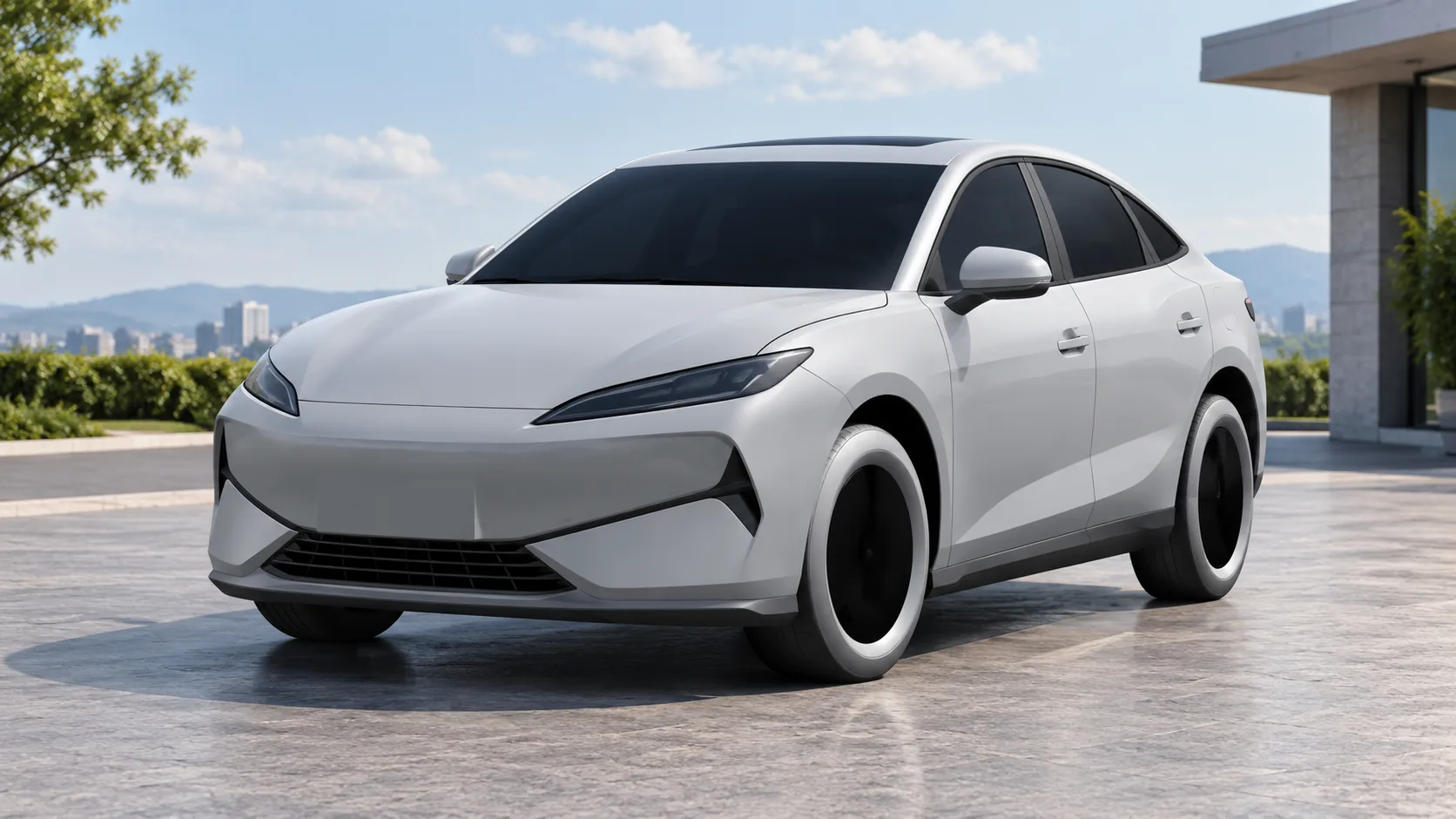
BYD’s India ambitions just got another data point worth watching. The company has filed a design patent in India for its Linghui E7, a mid-size electric sedan that currently sells in China under BYD’s dedicated ride-hailing sub-brand, Linghui. While a patent filing is far from a confirmed launch, it’s the kind of paperwork trail that automotive watchers take seriously, since BYD has followed a similar pattern with several of its other models before eventually bringing them to Indian showrooms.
What We Know About the Linghui E7
The Linghui E7 isn’t an all-new car built from scratch. It’s derived from BYD’s existing e7, a model that has served commercial and ride-hailing operators in China since 2025. What makes the patented version notable is the mechanical update at its core: a Blade Gen-2 battery pack, BYD’s next-generation LFP cell technology built for better safety and thermal performance.
Dimensionally, the sedan measures 4,780mm in length, 1,900mm in width, and roughly 1,500mm in height, putting it squarely in the mid-size sedan bracket. Its design leans practical rather than flashy. Outside, you get 17-inch alloy wheels finished in a blacked-out treatment, a full-LED lighting setup, a closed-off front grille (a signature EV styling cue), and large air intakes. Step inside, and the cabin follows a familiar modern EV script: a panoramic glass roof, sizeable infotainment and instrument displays, dark interior trim, a 360-degree camera system, a column-mounted gear selector, and rear air-conditioning vents for back-seat comfort.
On performance, the Linghui E7 doesn’t chase big numbers. It’s front-wheel drive with an output of 134bhp and 180Nm of torque, paired with battery options of 48kWh and 57.6kWh. Under China’s CLTC test cycle, these translate to claimed ranges of 450km and 550km, respectively, numbers that would likely shrink under India’s real-world driving and testing conditions but still represent a genuinely usable daily range.
Why This Matters for India
BYD has been steadily building out its Indian portfolio, with the e6, Atto 3, Seal, Sealion 7, and the upcoming Seal U DM-i and eMAX 7 already part of its lineup or pipeline. A patent filing for the Linghui E7 suggests the company sees room for another mid-size electric sedan in the market, one that could potentially undercut the Seal on price while still offering a modern EV feature set.
That said, patents are a legal formality, not a launch announcement. They protect design rights and often get filed well before, or sometimes without, an actual product reaching dealerships. For now, the sensible read is that BYD is keeping its options open in India’s growing EV segment, and the Linghui E7 is one more name to keep an eye on.
Also See :- Hyundai Creta Electric Buyback Value: 60% Return After 3 Years