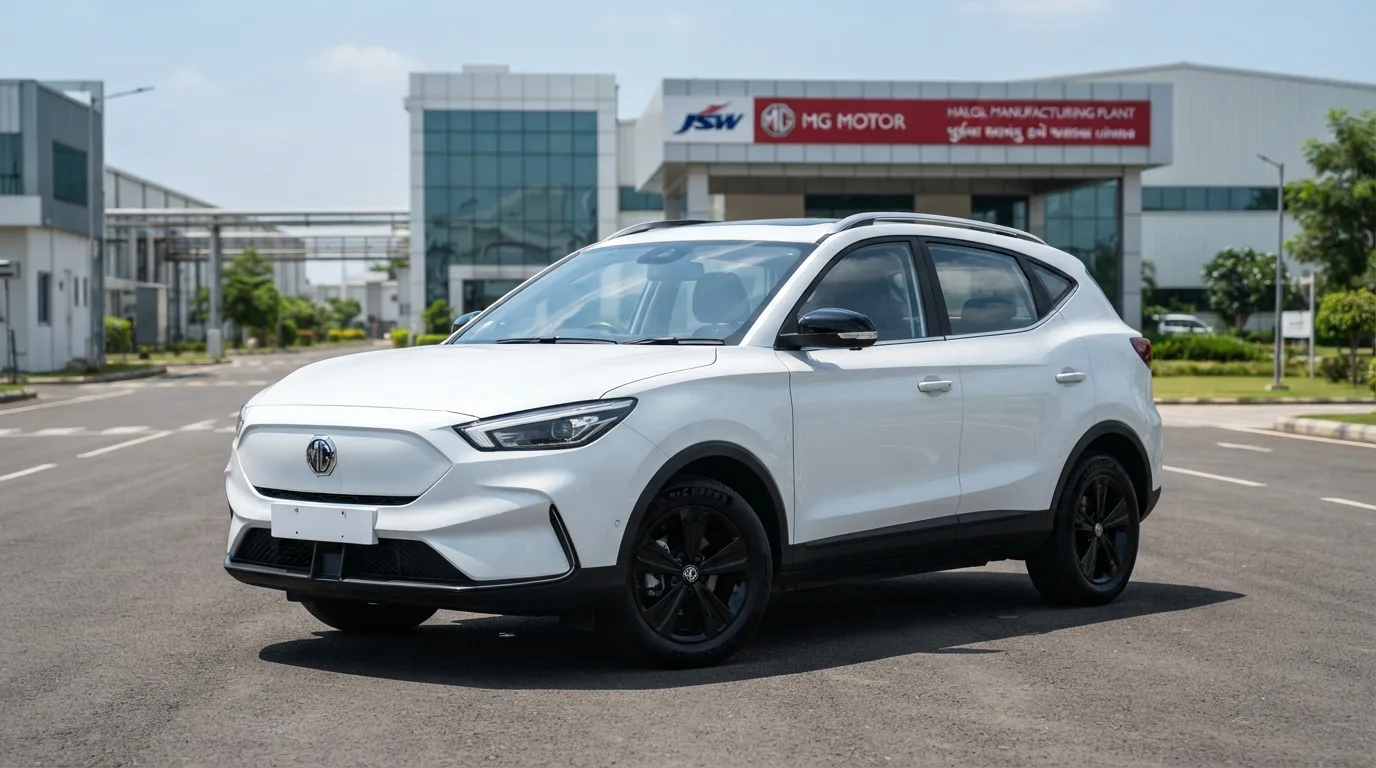
JSW MG Motor India is putting real money behind its India growth story. The company has confirmed a fresh investment of ₹1,400 crore into its Halol manufacturing facility in Gujarat, one of the largest single commitments the automaker has made in the country so far. The plan is straightforward on paper but ambitious in execution: build more cars, source more parts locally, and get new models onto Indian roads faster, all within the current financial year.
For an industry watching India’s shift toward electric and hybrid mobility closely, this isn’t just another capex announcement. It signals how seriously legacy-turned-modern automakers are betting on the Indian new energy vehicle (NEV) segment.
Where the Money Is Going
The ₹1,400 crore isn’t being spread thin. Company officials have pointed to three priorities that will absorb most of the investment:
- Scaling up production capacity at Halol
- Deepening localisation of components
- Funding new product development for upcoming launches
Localisation, in particular, seems to be the strategic centerpiece here. The more parts JSW MG can build or source within India, the less exposed it is to import costs and currency fluctuations, and the better its pricing power becomes against rivals like Tata, Mahindra, and Hyundai.
Capacity Numbers: What’s Changing
Here’s a quick snapshot of how the Halol plant’s output is expected to evolve:
| Milestone | Annual Production Capacity |
|---|---|
| Current capacity | ~1.2 lakh vehicles |
| After Phase 1 expansion (this financial year) | ~1.6 lakh vehicles |
| Future target (later phase) | ~3 lakh vehicles |
That first jump, from 1.2 lakh to 1.6 lakh units, works out to roughly a 33% increase, and it’s meant to be completed within the current fiscal year. The 3 lakh unit target is a longer-term goal without a confirmed timeline yet, but it gives a sense of how big JSW MG wants Halol to become.
Four New Vehicles Are Coming
Alongside the capacity boost, JSW MG is lining up four new vehicle launches for this financial year. What’s notable is the spread across powertrains rather than a single-minded EV push. Buyers can expect a mix of:
| Powertrain Type | Purpose |
|---|---|
| Battery Electric Vehicle (BEV) | Pure electric, zero tailpipe emissions |
| Plug-in Hybrid (PHEV) | Electric-first with petrol backup |
| Hybrid | Fuel efficiency without charging dependency |
| ICE (Internal Combustion Engine) | Serves buyers not yet ready for electrification |
This isn’t a company betting everything on EVs overnight. It’s hedging across technologies while still leaning hard into electrification, which makes sense given how uneven EV adoption still is across Indian states and cities.
The NEV Ambition Is Real
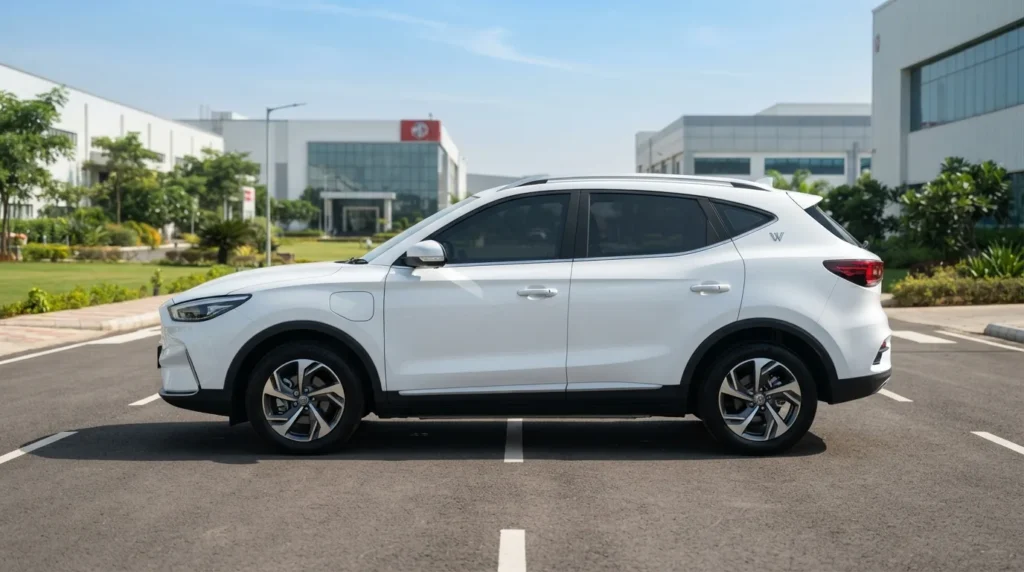
JSW MG has been vocal about wanting 70–80% of its total sales to eventually come from new energy vehicles, a category that includes both electric and hybrid models. The MG Windsor EV has already done a lot of heavy lifting here, becoming one of the more visible EVs on Indian roads. Add to that the gradual improvement in public charging infrastructure and rising interest from Tier-2 and Tier-3 cities, and the company’s optimism starts to look less like marketing spin and more like a calculated bet on where the market is headed.
The ADAPT Platform Ties It All Together
None of this expansion happens in isolation. JSW MG’s ADAPT platform, a flexible architecture built to support BEVs, hybrids, plug-in hybrids, and range-extender EVs on the same base, is what makes multi-powertrain manufacturing at scale actually feasible. Sharing components across different models cuts development costs and speeds up how quickly new variants can reach production lines. It’s the kind of engineering decision that doesn’t make headlines on its own but quietly supports everything else in this expansion plan.
Sales Growth Backs the Investment
This isn’t expansion for the sake of expansion. JSW MG’s 2025 sales grew close to 19% year-on-year, crossing 70,000 units. That kind of momentum gives the ₹1,400 crore investment a solid justification: capacity is being added because demand is already showing up, not just because the company hopes it will.
What It Means for Buyers
For everyday car buyers, the practical upside includes shorter waiting periods once capacity ramps up, a wider spread of SUV and EV options, and potentially better pricing as localisation reduces costs. Whether that translates into meaningfully lower sticker prices remains to be seen, but the direction is encouraging for anyone shopping in the EV or hybrid segment over the next year or two.
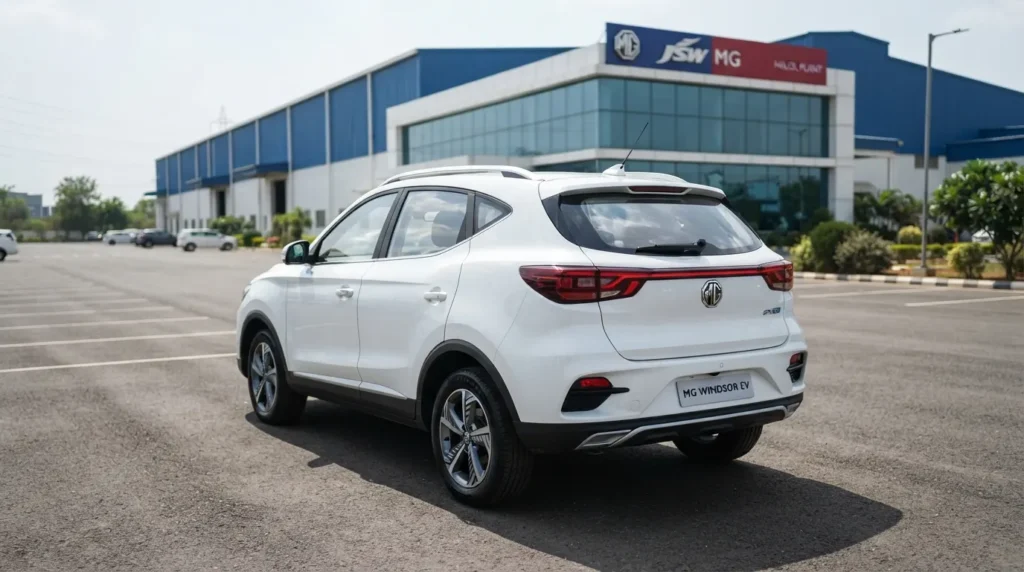
Taken together, the Halol investment, the ADAPT platform, and the four upcoming launches paint a picture of a company trying to compete on multiple fronts at once, capacity, technology, and affordability, rather than betting the entire strategy on one segment.