
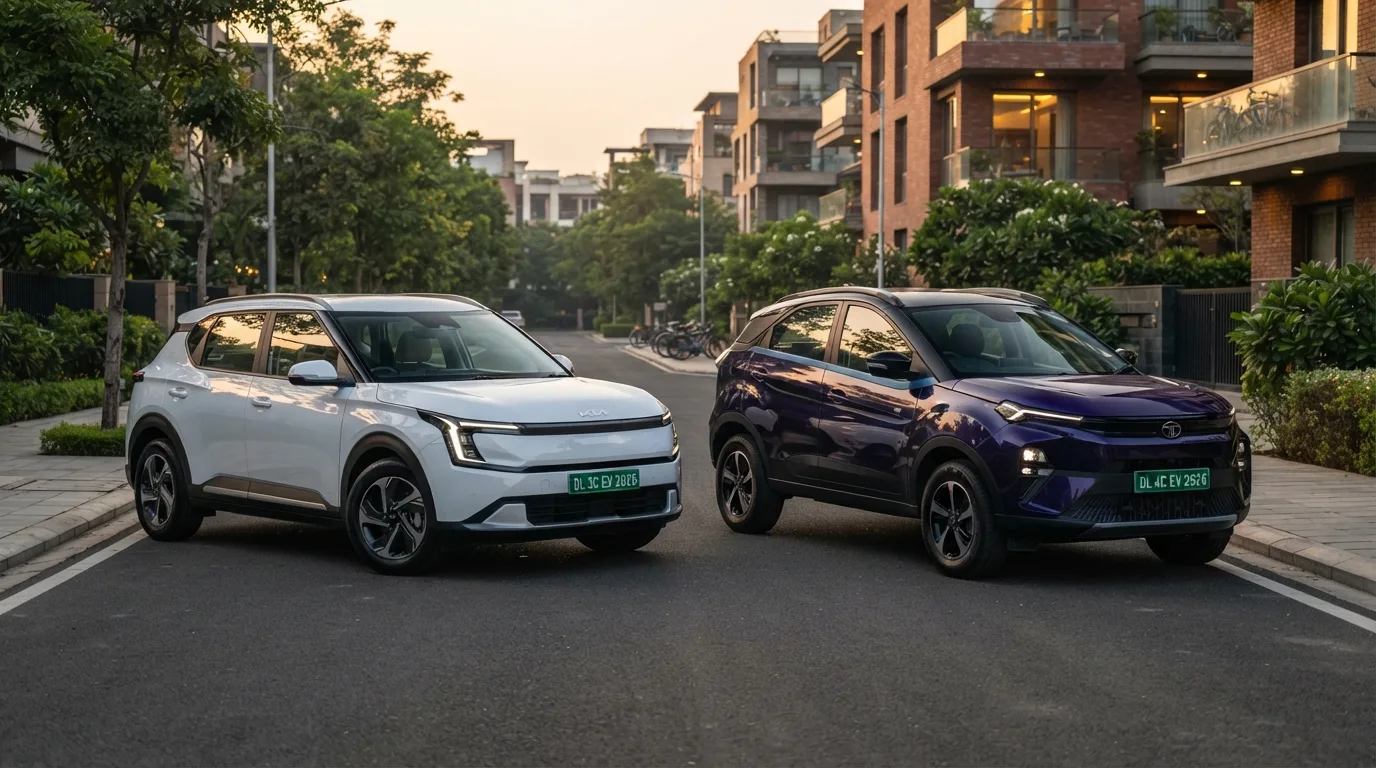
India’s electric SUV space is heating up, and two names keep coming up in every buyer’s shortlist right now: the Kia Syros EV and the Tata Nexon EV. Tata already has a strong track record here, having sold the Nexon EV in big numbers over the past few years. Kia, meanwhile, is gearing up to enter this space with the Syros EV, aiming to bring its known strengths in design and cabin tech to the electric segment. If you’re trying to decide between the two, here’s an honest, detail-first comparison to help you make the right call.
Design: Fresh Face vs Familiar Favourite
The Kia Syros EV is expected to carry a modern, global-inspired design language think a closed-off front grille (since there’s no engine to cool the traditional way), sharp LED lighting, and a stance that feels more premium than practical. It’s built to turn heads in city traffic.
The Tata Nexon EV, on the other hand, has already proven its road presence. With connected LED lighting, flush door handles, and a sporty yet family-friendly silhouette, it doesn’t need to prove anything new. If you want something that looks fresh and different, the Syros EV has the edge. If you prefer a design that’s already won people over, the Nexon EV holds its ground.
Range and Performance: The Real Deciding Factor
For most Indian buyers, range anxiety is still the biggest hurdle when choosing an EV, and this is where the comparison gets interesting.
The Kia Syros EV is expected to pack a battery in the 45–50 kWh range, targeting a claimed driving range of roughly 450–500 km on the MIDC cycle. The Tata Nexon EV already delivers an ARAI-certified range crossing 450 km in its larger battery variant, though real-world numbers usually settle between 320–380 km once you factor in traffic, AC usage, and driving style, which is worth keeping in mind, since claimed figures rarely match daily driving.
Both SUVs are expected to support fast DC charging, letting you top up from around 10% to 80% in under an hour with a compatible charger.
Features and Technology
Kia has a reputation for loading its cars with features, and the Syros EV is expected to continue that habit with a large touchscreen, a fully digital instrument cluster, wireless Android Auto and Apple CarPlay, ventilated seats, a panoramic sunroof on top variants, a 360-degree camera, and possibly Level-2 ADAS.
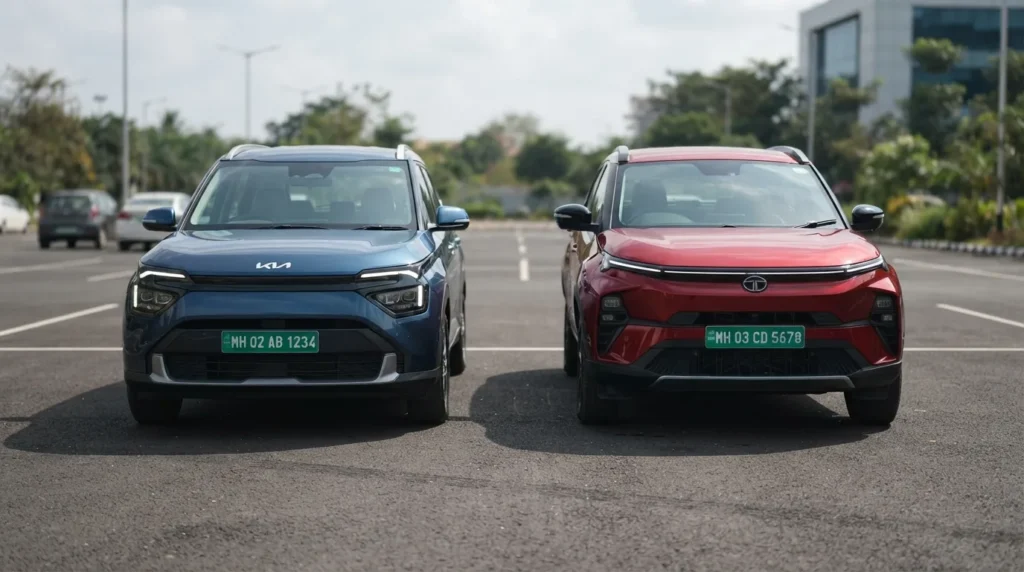
The Nexon EV isn’t far behind. It already offers a 12.3-inch touchscreen, a 10.25-inch digital driver display, a JBL sound system, wireless charging, an air purifier, and useful additions like Vehicle-to-Load (V2L) and Vehicle-to-Vehicle (V2V) charging support, which are genuinely handy if you ever need to power a device or another EV.
On paper, this round looks close, and it may well come down to which brand executes its tech better in real-world use.
Safety First
Safety is where Tata has built real trust over the years. The Nexon EV comes with six airbags, Electronic Stability Program (ESP), ABS with EBD, a 360-degree camera, Hill Hold Assist, and ISOFIX child seat mounts, a package that has consistently performed well in crash evaluations.
The Kia Syros EV is also expected to offer six airbags, ADAS-based driver assistance, electronic stability control, and modern parking aids. That said, its actual crash-test performance will only be known once independent agencies evaluate it post-launch, so this remains an area to watch rather than assume.
Expected Pricing
The Kia Syros EV is likely to be priced between ₹16 lakh and ₹20 lakh (ex-showroom), positioning it as a premium option. The Tata Nexon EV currently starts around ₹13–15 lakh, with top variants going past ₹17 lakh, making it the more value-driven choice today.
| Feature | Kia Syros EV | Tata Nexon EV |
|---|---|---|
| Expected Range | 450–500 km | Up to 450+ km (ARAI) |
| Battery | Around 45–50 kWh (Expected) | Multiple battery options |
| Features | Premium cabin, ADAS expected | Proven feature-rich package |
| Fast Charging | Expected | Available |
| Safety | Six airbags, ADAS expected | Six airbags, ESP, strong safety record |
| Price | ₹16–20 lakh (Expected) | ₹13–17 lakh (Approx.) |
Which One Should You Buy?
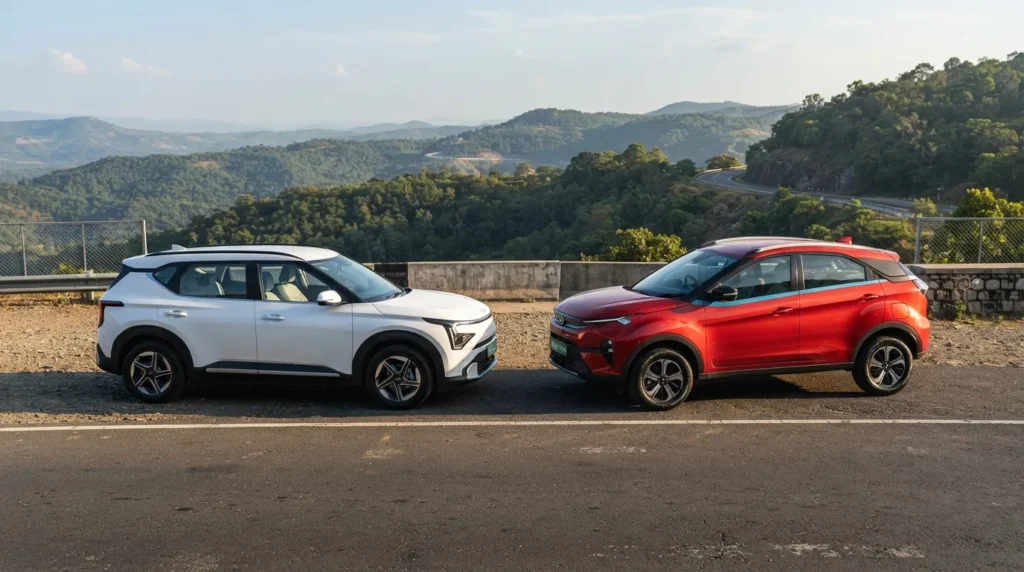
If you need a dependable electric SUV today, backed by a wide service network and a genuinely solid safety record, the Tata Nexon EV remains the smarter, safer buy. But if you’re willing to wait and want something that feels new, premium, and packed with the latest tech, the Kia Syros EV could turn out to be a serious challenger once it actually launches, provided Kia gets the pricing right.
Either way, both cars represent how far India’s EV market has come, and buyers finally have real choices worth comparing.