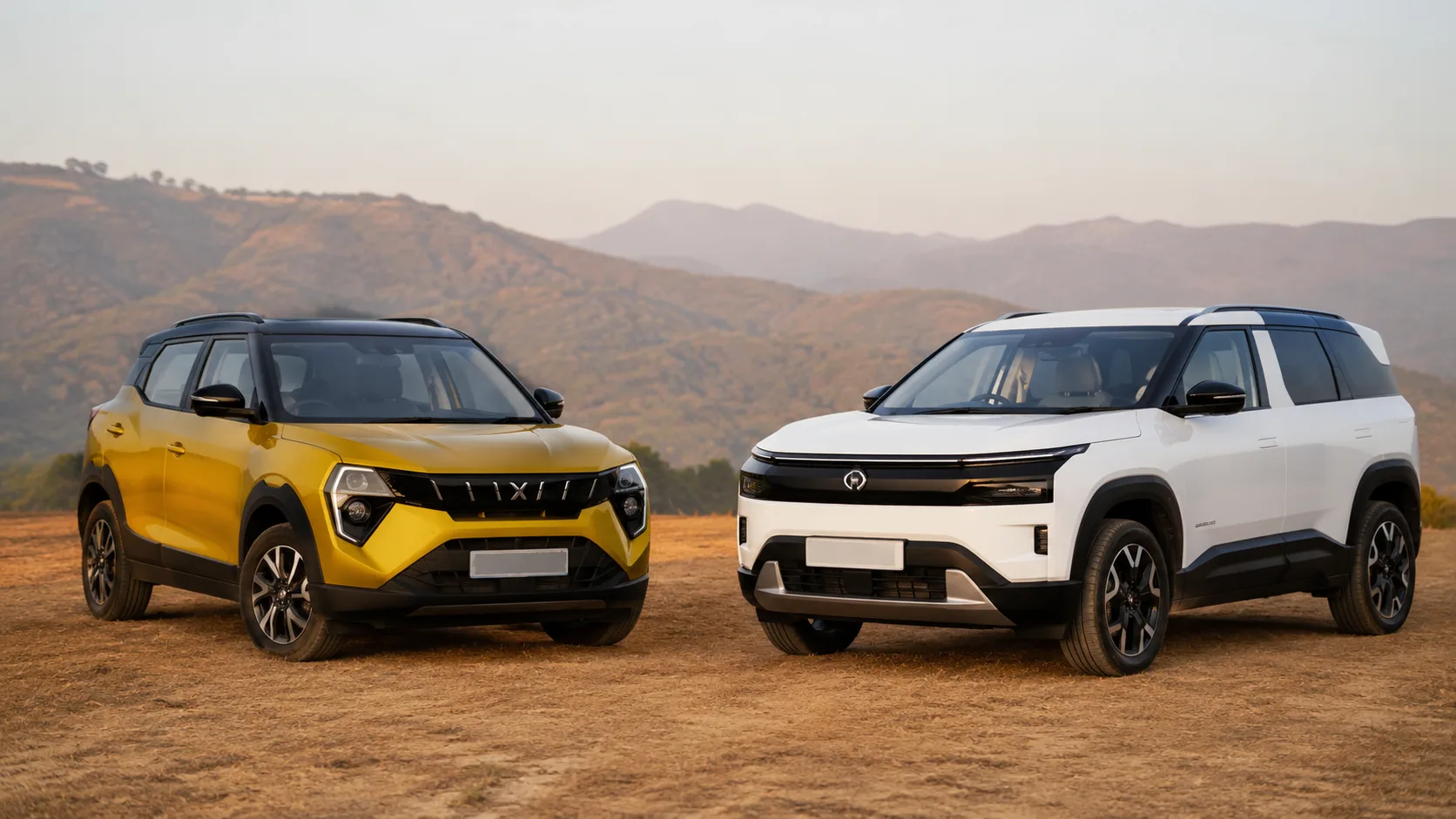
The Indian family SUV segment just got a lot more interesting. Two names are dominating dealership conversations and online forums right now: the Mahindra XUV 7XO and the Tata Sierra. Both promise a mix of comfort, space, and modern features, but they go about it in very different ways. If you’re trying to decide between the two, here’s an honest, side-by-side look to help you make up your mind.
Two Very Different Personalities
The XUV 7XO carries forward Mahindra’s now-familiar design language, a bold front face, connected LED lighting, sharp body creases, and a stance that feels muscular without trying too hard. It’s the kind of SUV that looks at home on a highway or outside an office parking lot.
The Tata Sierra takes the opposite route. It brings back a name that many Indian buyers grew up admiring, and it does so with a genuinely fresh design, a large glass greenhouse, a tall, upright stance, and clean, minimal surfacing that doesn’t try to copy anything else on the road today. If you want an SUV that turns heads for being different rather than aggressive, the Sierra has the edge.
Space and Everyday Comfort
This is where both SUVs try hard to win family buyers over, and honestly, both succeed in their own way.
Inside the XUV 7XO, you get a wide cabin, ventilated front seats, a panoramic sunroof, twin digital screens, and enough storage to keep a family’s daily clutter organised. Rear seat comfort stands out in particular, which matters a lot if your trips involve long highway stretches with kids or elderly parents in the back.
The Tata Sierra leans into its tall glass cabin to create what feels like a lounge on wheels. The upright seating position, combined with large windows, makes the cabin feel airy rather than cramped, and rear passengers get noticeably better visibility and headroom than in most SUVs this size.
If your family regularly travels together with five adults on board, either SUV should keep everyone comfortable. The difference really comes down to whether you prefer a sporty cabin feel or an open, airy one.
Engines and How They Drive
Mahindra is expected to offer the XUV 7XO with turbo-petrol and diesel engines, paired with both manual and automatic transmission choices. These are proven, well-tested powertrains that Mahindra has refined over the years, which should translate into confident city driving and comfortable highway cruising.
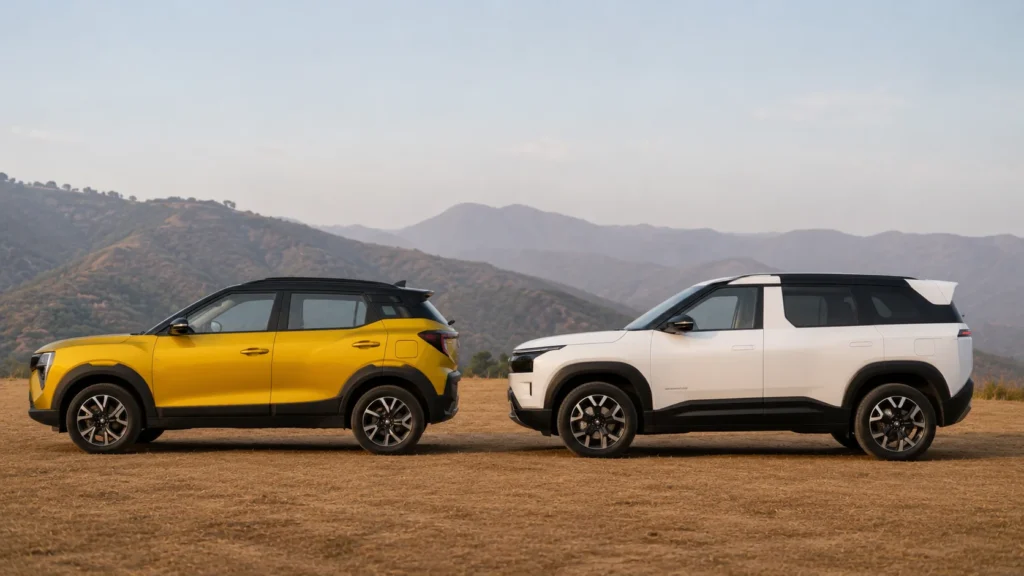
Tata, meanwhile, is positioning the Sierra as a bridge between conventional and future mobility, with both petrol and electric powertrain options expected. The petrol version should focus on refinement and everyday efficiency, while the electric variant is aimed at buyers who want a quieter ride and lower running costs over time.
So if you clock a lot of highway kilometres and want flexibility in fuel choice, the XUV 7XO currently has the upper hand. If you’re curious about going electric on your next SUV, the Sierra gives you that option without forcing it.
Features That Matter Day to Day
Both SUVs are loaded with the kind of tech Indian buyers now expect as standard rather than a luxury.
The XUV 7XO is expected to come with a large touchscreen infotainment system, a fully digital instrument cluster, wireless Android Auto and Apple CarPlay, ventilated seats, a panoramic sunroof, wireless charging, a 360-degree camera, and Mahindra’s connected car suite.
The Tata Sierra is expected to match this with a large floating touchscreen, a digital driver’s display, a premium sound system, a panoramic sunroof, connected vehicle features, wireless smartphone connectivity, multi-zone climate control, and noticeably premium interior materials.
Do keep in mind that exact feature availability will depend on the variant you pick, so it’s worth checking the top trims closely before deciding.
Safety First
For most Indian families today, safety ratings and equipment are non-negotiable, and both brands seem to know it.
Mahindra typically equips its newer SUVs with multiple airbags, Electronic Stability Control, ABS with EBD, traction control, ADAS-based driver assistance, and a full set of parking cameras.
Tata has built its reputation on safety over the last few years, and the Sierra is expected to continue that trend with six airbags, ADAS, electronic stability control, strong crash protection, and modern driver-assistance features.
Neither SUV should leave safety-conscious buyers disappointed.
Living With It Day to Day
The XUV 7XO benefits from Mahindra’s wide service network and its already-proven turbo engines, which matters if you want the peace of mind of familiar, tested technology.
The Tata Sierra stands apart with its unique design and the option of going electric, which appeals to buyers thinking ahead about fuel costs and future-readiness. That said, if you’re leaning toward the EV variant, it’s worth checking the charging infrastructure in your city before committing.
Quick Specification Comparison
| Feature | Mahindra XUV 7XO | Tata Sierra |
|---|---|---|
| Body Style | Premium Family SUV | Premium Family SUV |
| Powertrain | Petrol & Diesel | Petrol & Electric (expected) |
| Transmission | Manual & Automatic | Manual, Automatic & EV |
| Seating | 5 Seater | 5 Seater |
| Infotainment | Large Touchscreen | Large Touchscreen |
| Sunroof | Panoramic | Panoramic |
| ADAS | Expected | Expected |
| Best For | Highway & Performance | Comfort & Future Mobility |
So, Which One Should You Buy?
There’s no universal right answer here; it really comes down to what you drive for and what excites you about a new car.
Go for the Mahindra XUV 7XO if you prefer petrol or diesel power, drive long highway distances often, want proven engine options, and enjoy a sportier driving feel.
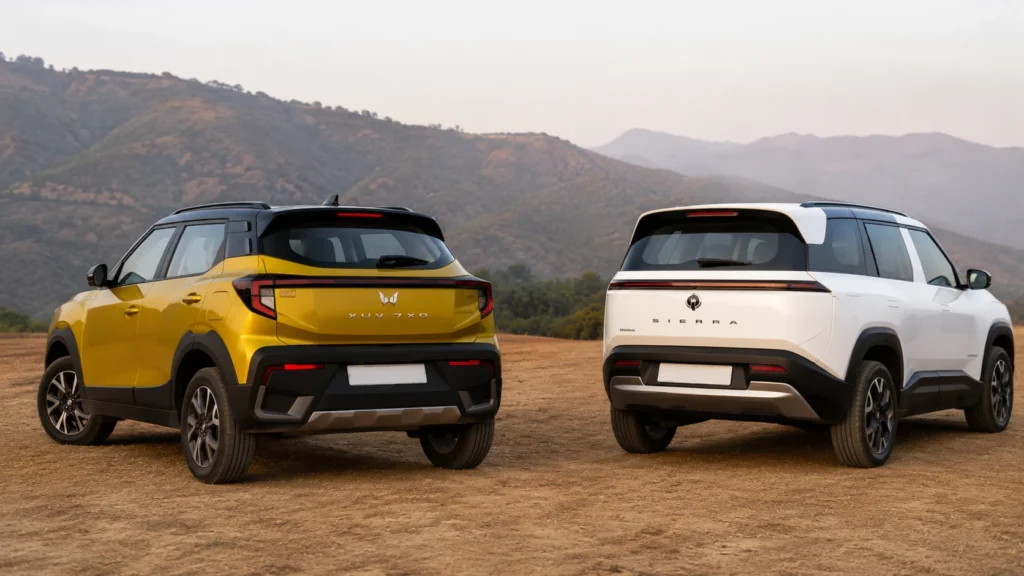
Go for the Tata Sierra if you want a design that stands out, a spacious and premium-feeling cabin, the option of an electric powertrain, and a more relaxed, future-facing ownership experience.
Both the XUV 7XO and the Sierra are strong, well-thought-out family SUVs; you genuinely can’t go wrong either way. The smarter move is to book a test drive of both before finalising, since preferences around ride feel, cabin ambience, and powertrain choice are deeply personal. Once you’ve sat in both and taken them for a spin, the right choice usually becomes obvious on its own.