
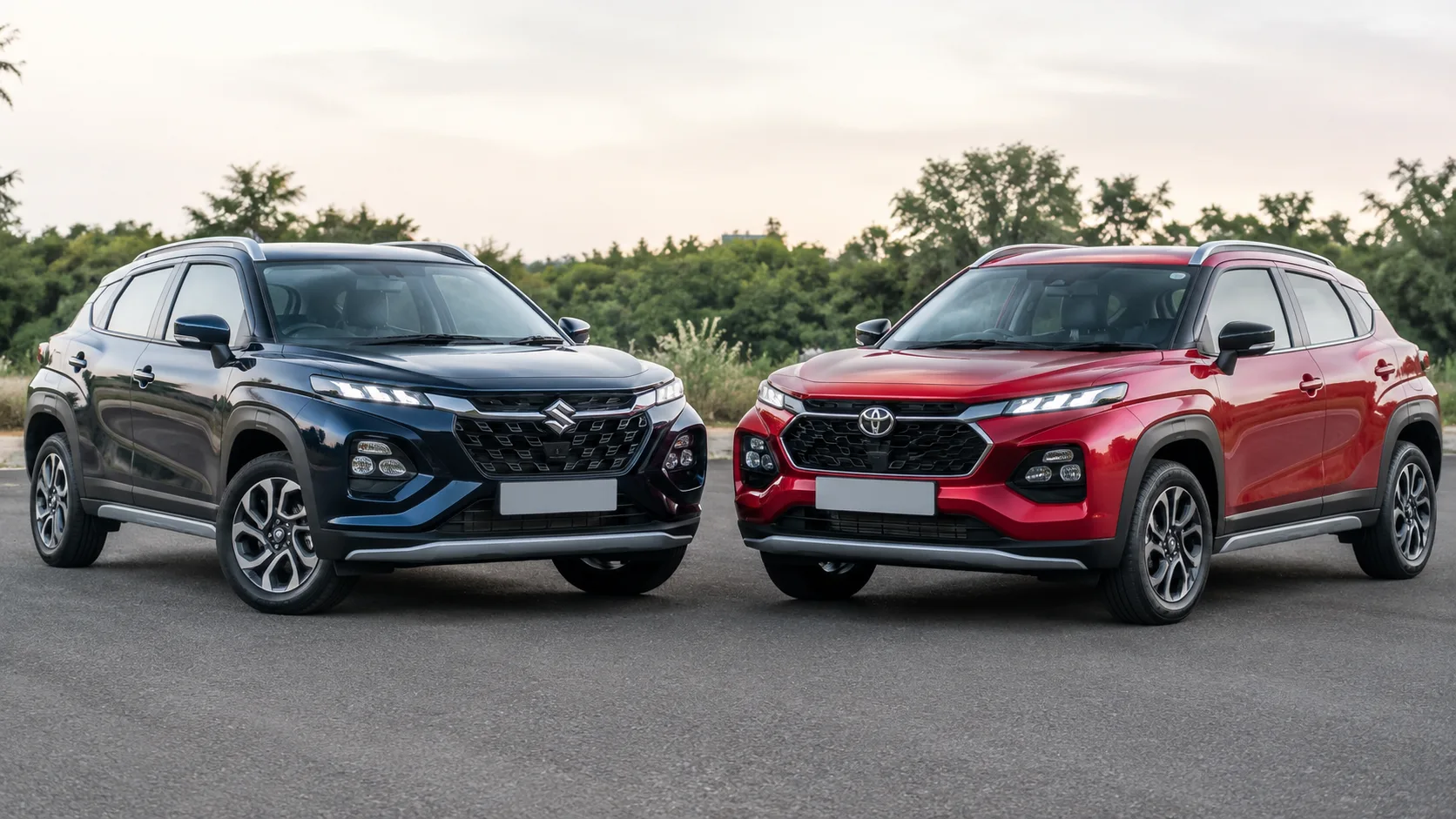
If you’ve spent any time browsing showrooms or scrolling through car forums lately, you’ve probably noticed how often these two names come up together. The Maruti Fronx Turbo price and the Toyota Taisor Turbo price are usually mentioned in the same breath, and there’s a good reason for that. Underneath the badges, these two coupe-style SUVs share the same bones, the same platform, the same engine, same gearbox choices. Yet somehow, buyers walk into one showroom and walk out convinced it’s the obviously better car, only to hear the exact opposite from someone who bought the other one.
So which one actually makes more sense for your money in 2026? Let’s break it down properly.
How They Look on the Road
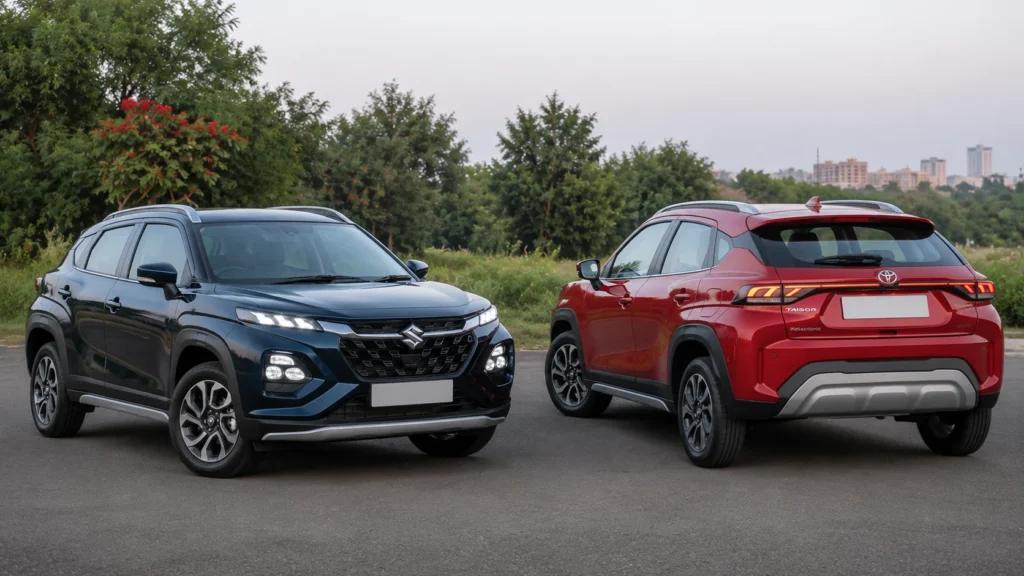
The Fronx Turbo carries Maruti’s sportier design language, a wide front grille, connected LED DRLs running across the nose, and a roofline that slopes down toward the rear in a way that genuinely turns heads in traffic. It feels young, almost like it’s trying to convince you it’s faster than it actually is.
The Taisor Turbo, on the other hand, gets Toyota’s own front fascia, a reworked bumper, and slightly different badging that gives it a calmer, more grown-up presence. The silhouette underneath is identical, but Toyota’s tweaks make it look a notch more premium to most eyes, though that’s admittedly subjective.
Verdict: A genuine tie. Pick based on which face you’d rather see in your rearview mirror every morning.
Engine and How It Actually Drives
Both cars use the same 1.0-liter turbo-petrol engine, putting out around 100 PS and 148 Nm of torque, paired with either a 5-speed manual or a 6-speed torque-converter automatic. In real-world driving, you genuinely cannot tell them apart — same pull on the highway, same slightly lazy response below 2,000 rpm, same eagerness once the turbo spools up.
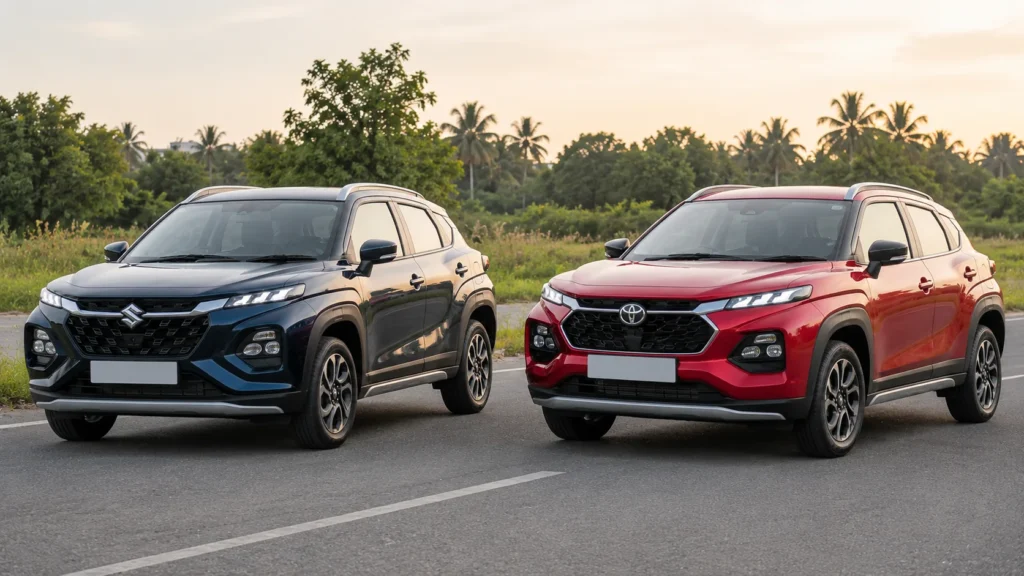
If anyone tells you one feels noticeably quicker than the other, take it with a pinch of salt. The engines, ECU tuning, and gearboxes are identical.
Verdict: Tie.
Features You Actually Get
Both SUVs come loaded with a similar set of goodies on their higher trims:
- 9-inch touchscreen with wireless Android Auto and Apple CarPlay
- Head-Up Display
- 360-degree camera
- Automatic climate control with rear AC vents
- Cruise control and push-button start
- Wireless phone charger
- Connected car features on top variants
You won’t find yourself missing anything by choosing one over the other purely on equipment.
Verdict: Tie.
Safety
Six airbags on top trims, ESP, hill-hold assist, ABS with EBD, ISOFIX mounts, and rear parking sensors come standard across both lineups. Since they share a platform, the actual crash structure and behavior in an accident should be nearly identical too.
Verdict: Tie.
Mileage
| Model | Manual Mileage | Automatic Mileage |
|---|---|---|
| Maruti Fronx Turbo | Around 21 km/l | Around 20 km/l |
| Toyota Taisor Turbo | Around 21.5 km/l | Around 20 km/l |
In daily city use, expect both to return somewhat lower numbers, typically 14 to 16 km/l depending on traffic and driving style, with highway runs getting closer to the claimed figures.
Actual Price Comparison (Ex-Showroom, 2026)
This is where things get interesting, because the gap is smaller than most people assume.
| Variant Type | Maruti Fronx Turbo | Toyota Taisor Turbo |
|---|---|---|
| Turbo Manual (Entry) | ₹9.71 lakh | ₹10.20 lakh |
| Turbo Automatic (Top-spec) | ₹11.98 lakh | ₹12.47 lakh |
Roughly speaking, the Taisor Turbo sits about ₹25,000 to ₹50,000 higher than the equivalent Fronx Turbo variant, depending on trim and gearbox. Prices vary slightly by city and dealer offers, so it’s always worth checking with your local showroom before finalizing a decision.
Ownership Experience
This is the part numbers can’t fully capture. Maruti Suzuki runs the largest service network in the country, which translates to easier access to spare parts, shorter wait times for servicing, and generally lower maintenance bills over the years. Toyota, meanwhile, has built its reputation on long-term reliability and a customer service experience that many existing owners genuinely rave about, even if their network isn’t as widespread.
If you live in a smaller town, the Fronx’s wider dealer reach might matter more than you’d expect. If you’re in a metro with a Toyota service center nearby, that gap mostly disappears.
So, Which One Should You Actually Buy?
Honestly, there’s no universally “right” answer here; these two are mechanical twins wearing different outfits. That said, here’s a simple way to think about it:
Go with the Maruti Fronx Turbo if you want a slightly lower purchase price, the convenience of Maruti’s massive service network, and easier resale value down the line.
Go with the Toyota Taisor Turbo if brand trust matters to you, you prefer Toyota’s styling, and you’re willing to pay a small premium for what many owners describe as a smoother after-sales experience.
For most buyers focused purely on value for money, the Fronx Turbo edges ahead simply because of its lower starting price and bigger service footprint. But if long-term peace of mind and Toyota’s badge appeal are worth a bit extra to you, the Taisor Turbo isn’t a bad trade-off at all.
Either way, you’re getting the same engine, same safety, and largely the same driving experience, so this decision really comes down to brand preference and budget, not which car is “better.”