
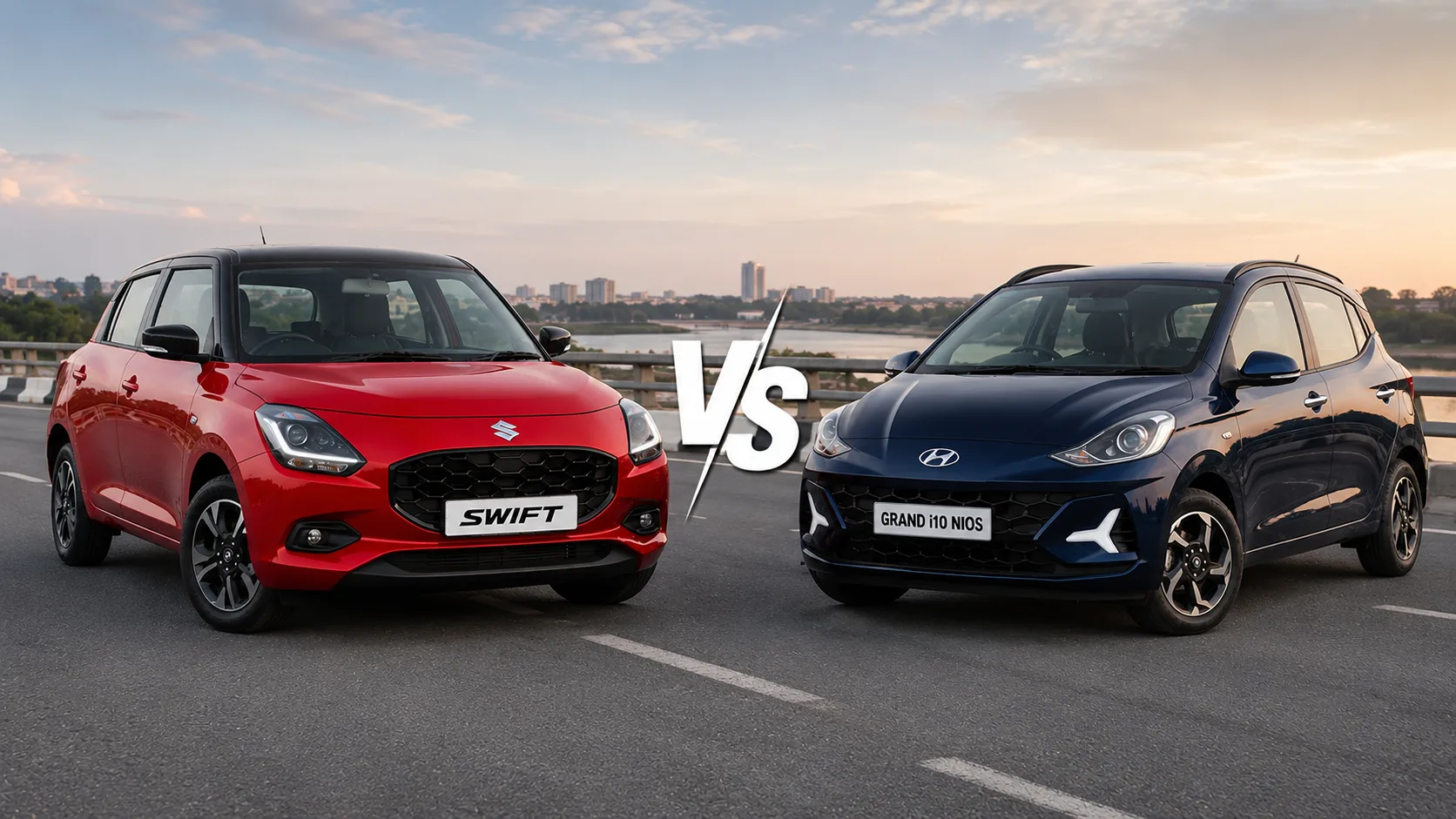
Choosing between the Maruti Swift and the Hyundai Grand i10 Nios is one of the most common dilemmas for hatchback buyers in 2026. Both cars sit in the same price bracket, both promise low running costs, and both have loyal fan followings. But once you actually sit down and compare them, some clear differences show up. Here’s an honest, easy-to-understand comparison to help you pick the right one for your daily drive.
Price Comparison
| Variant | Maruti Swift | Hyundai Grand i10 Nios |
|---|---|---|
| Starting Price (Ex-showroom) | Around ₹6.70 lakh | Around ₹5.98 lakh |
| Top Variant | Around ₹9.65 lakh | Around ₹8.85 lakh |
The Grand i10 Nios wins on paper if you’re watching your budget closely. But the Swift’s slightly higher price comes with a newer platform and a more updated powertrain, so it doesn’t feel like you’re paying extra for nothing.
Engine and Performance
The Swift runs on a 1.2-liter three-cylinder petrol engine, good for around 82 PS and 112 Nm of torque, with manual and AMT gearbox options. The Grand i10 Nios uses a 1.2-liter four-cylinder Kappa petrol engine putting out roughly 83 PS and 114 Nm, also available with manual or AMT transmission.
On paper, they’re nearly identical. In real life, the difference shows up in how each engine feels. The Nios, with its extra cylinder, runs a touch smoother and quieter. The Swift feels lighter on its feet and reacts faster in city traffic, which is exactly the kind of character Swift buyers expect.
Mileage
| Model | Claimed Mileage |
|---|---|
| Maruti Swift Petrol MT | Up to 24.8 km/l |
| Maruti Swift Petrol AMT | Up to 25.75 km/l |
| Hyundai Grand i10 Nios Petrol MT | Around 20.7 km/l |
| Hyundai Grand i10 Nios AMT | Around 20.1 km/l |
If mileage is what decides your purchase, the Swift is simply in a different league here. That gap of 4-5 km/l adds up fast if you’re driving daily.
Features
Both cars are well-equipped for their price. The Swift brings a 9-inch touchscreen, wireless Android Auto and Apple CarPlay, automatic climate control, a wireless charger, six airbags, ESP, and a rear camera. The Grand i10 Nios counters with an 8-inch touchscreen, wireless smartphone connectivity, rear AC vents, a wireless charger, six airbags, TPMS, and a rear camera.
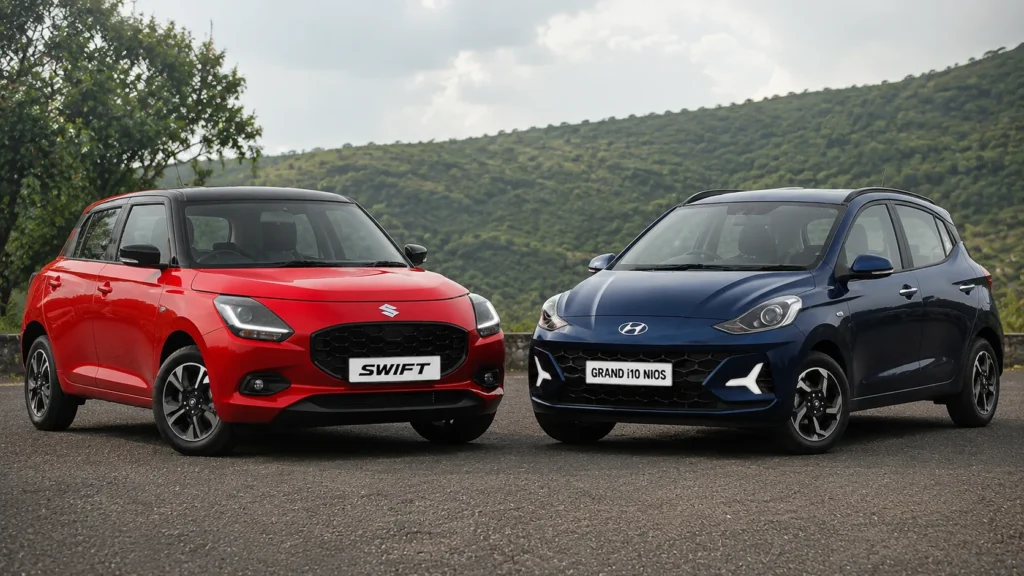
The Nios has an edge in rear-seat comfort thanks to those AC vents, while the Swift feels more modern with its bigger screen and refreshed cabin design.
Space and Practicality
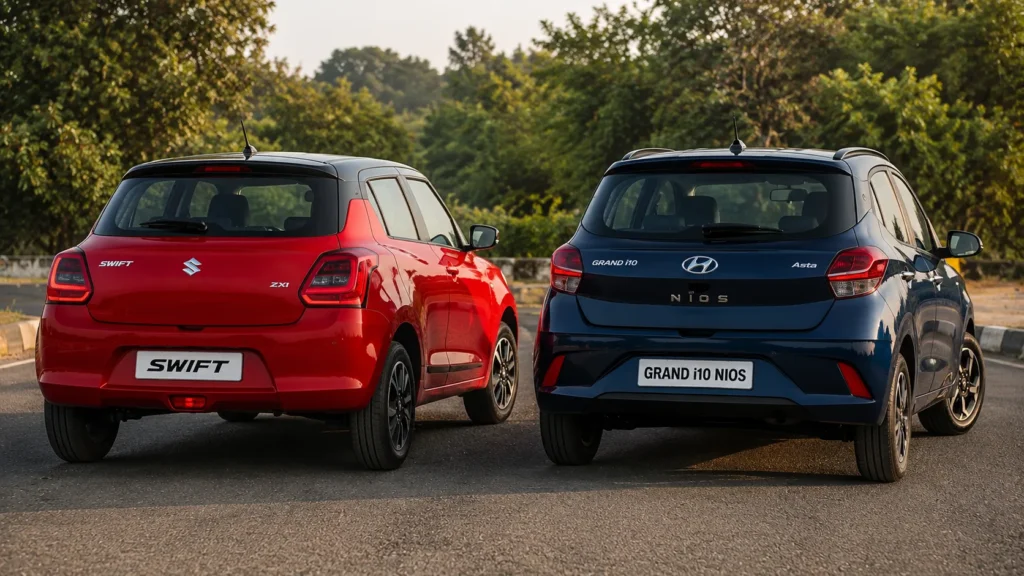
Rear seat space and headroom lean in favor of the Grand i10 Nios, making it a bit easier to live with for families who often carry rear passengers. The Swift, on the other hand, offers a 265-liter boot that handles weekend trips and everyday errands comfortably without feeling cramped.
Maintenance and Ownership
This is where the Swift pulls ahead again. Maruti Suzuki’s service network is the largest in the country; spare parts are cheap and easy to find, and long-term ownership costs stay low. Hyundai’s after-sales support is solid too, but maintenance bills tend to run a little higher over time.
Which Car Should You Choose?
Go for the Maruti Swift if mileage, low maintenance, and resale value matter most to you. Choose the Hyundai Grand i10 Nios if you want a smoother engine, better rear comfort, and a more relaxed daily drive. Both are genuinely good cars; the right pick simply depends on what you value more behind the wheel.