
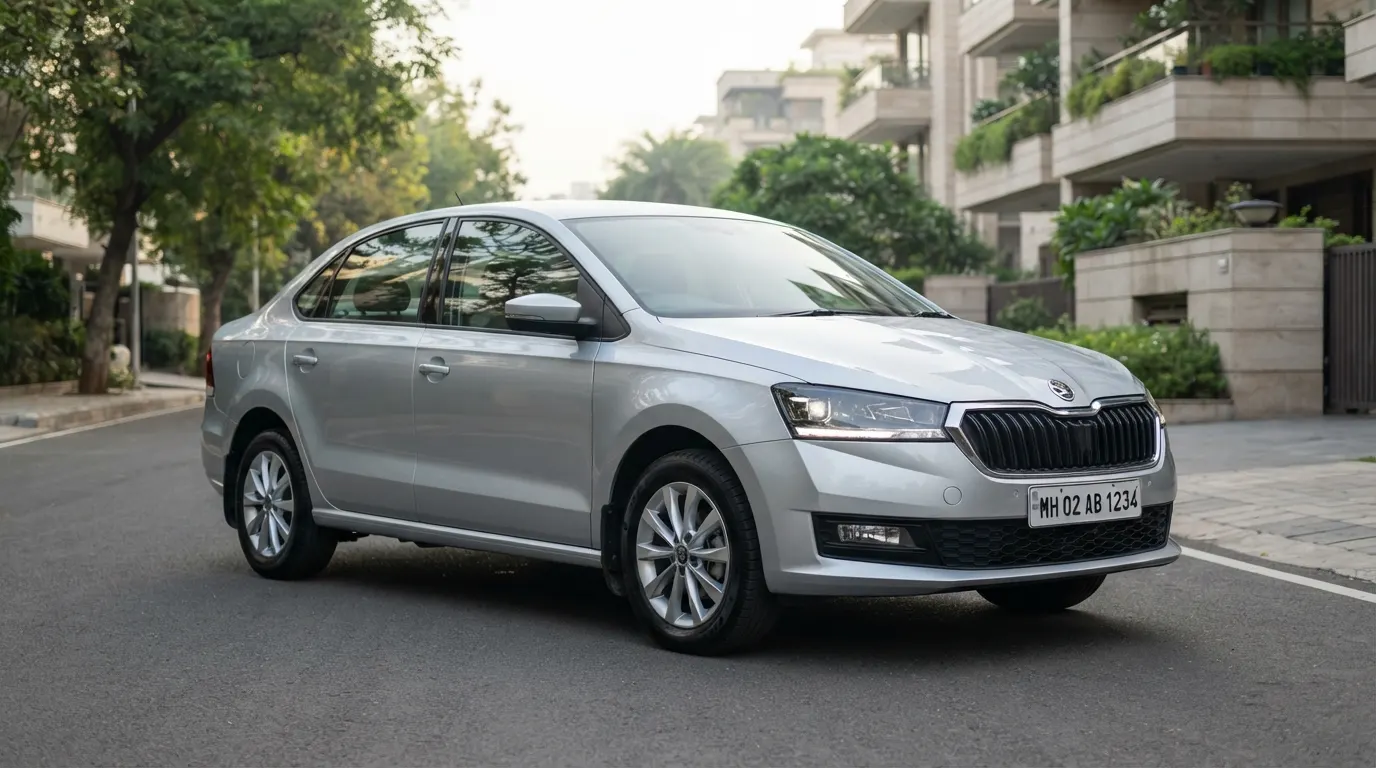
If you’re hunting for a used Skoda Rapid, you’re looking at one of the most underrated value-for-money sedans in the Indian pre-owned car market. Yes, Skoda discontinued the Rapid and replaced it with the Slavia, but that hasn’t stopped buyers from chasing it out — and honestly, it’s easy to see why. The Rapid still delivers that solid European build, a genuinely comfortable ride, rock-steady highway manners, and a driving experience that most cars in its price bracket simply don’t match.
This Skoda Rapid buying guide walks you through the best variants to shortlist, real-world mileage numbers, the problems that tend to show up as the car ages, and what to check before you hand over your money.
Why a Used Skoda Rapid Still Makes Sense
Back in its day, the Rapid gave more premium rivals like the Honda City, Hyundai Verna, and Maruti Ciaz a run for their money on driving dynamics. Its stiff body shell, planted handling, and refined engines still hold up well.
Here’s what continues to work in the Rapid’s favour:
- Confident, stable highway cruising
- A body structure that feels genuinely solid
- A suspension setup tuned for comfort
- A generous 550-litre boot
- A cabin that still feels a notch above the segment
- Reasonably good safety credentials for its era
Since most of the depreciation has already happened, a well-kept Rapid today is one of the smarter buys in the used car space.
Which Variant of the Used Skoda Rapid Should You Pick?
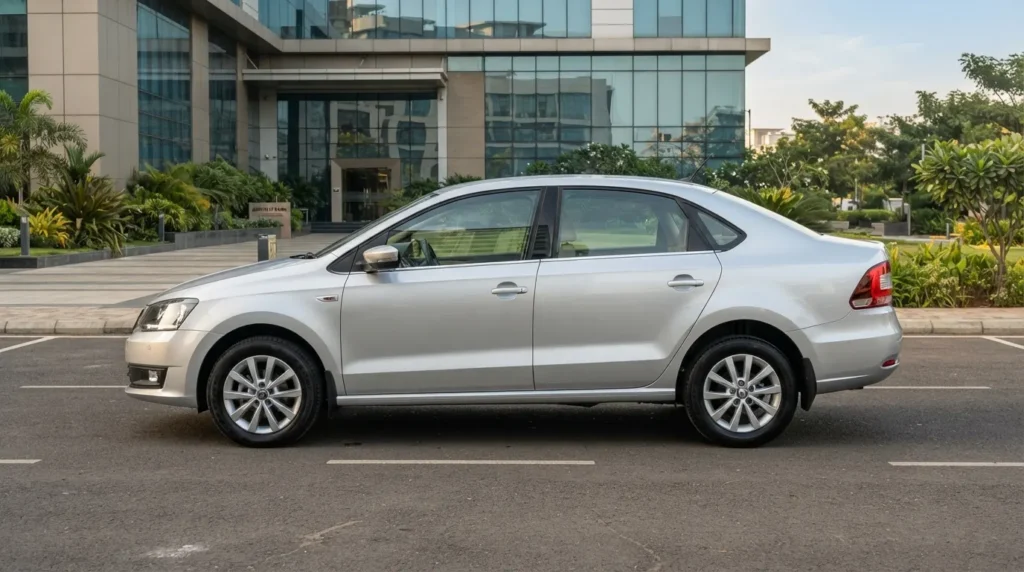
The right variant really comes down to your budget and how you plan to use the car.
| Variant | Recommendation | Suitable For |
|---|---|---|
| Rapid 1.0 TSI Style AT | ★★★★★ Best Choice | City + Highway |
| Rapid 1.0 TSI Style MT | ★★★★★ | Driving Enthusiasts |
| Rapid Rider Plus | ★★★★☆ | Value Buyers |
| Rapid 1.5 TDI MT | ★★★★☆ | High Highway Usage |
| Rapid 1.6 MPI | ★★★☆☆ | Budget Buyers |
Best overall pick: 2020–2021 Rapid 1.0 TSI Style. If your budget stretches this far, go for the facelifted model with the 1.0-litre TSI turbo-petrol engine. It’s quicker, more efficient, better equipped, and generally has fewer age-related niggles than the older cars.
Real-World Mileage You Can Expect
Actual mileage will always vary depending on how you drive and the traffic you deal with daily, but here’s a realistic range:
| Engine | City | Highway |
|---|---|---|
| 1.0 TSI Petrol MT | 14–16 km/l | 18–20 km/l |
| 1.0 TSI Automatic | 13–15 km/l | 17–19 km/l |
| 1.5 TDI Diesel | 18–20 km/l | 22–24 km/l |
| 1.6 MPI Petrol | 11–13 km/l | 15–17 km/l |
The diesel remains the mileage king by a fair margin, while the 1.0 TSI strikes a solid balance between fuel efficiency and everyday performance.
Common Problems to Watch For
Buying any used European car needs a careful eye, and the Rapid is no exception. Here’s where to look closely.
1. DSG Gearbox (automatic models): Cars fitted with the DQ200 dual-clutch automatic can develop mechatronic or clutch-pack issues as they rack up kilometres. During your test drive, watch for delayed gear shifts, jerky acceleration, unexpected warning lights, or shuddering at low speeds. If the car has crossed 40,000 km, insist on seeing the gearbox service record.
2. Suspension noise: Indian roads are hard on suspension bushes, link rods, shock absorbers, and steering components. Listen for knocking sounds over speed breakers or broken patches.
3. Steering rack: High-mileage cars sometimes develop play or a knocking sound in the steering. Left unattended, this repair can get pricey.
4. Clutch wear: Manual variants are generally durable, but heavy city driving can wear the clutch out faster. A heavy pedal feel or slipping under load is a red flag.
5. AC cooling: Older cars may show weak cooling, blower motor trouble, or compressor issues. Run the AC for a good 10 minutes during your inspection to be sure.
6. Electricals: Test every electrical feature, power windows, infotainment, reverse camera, central locking, steering-mounted controls, and climate control. Small electrical faults can turn expensive once the warranty runs out.
Why Service History Matters So Much
A complete, authorized service history changes everything when buying a Rapid. Ask the seller for service invoices, oil-change records, brake and suspension work, timing-related maintenance where applicable, and gearbox service records for automatic cars. A Rapid with paperwork to back it up is almost always the safer buy over one with a hazy history.
What to Inspect Before You Pay
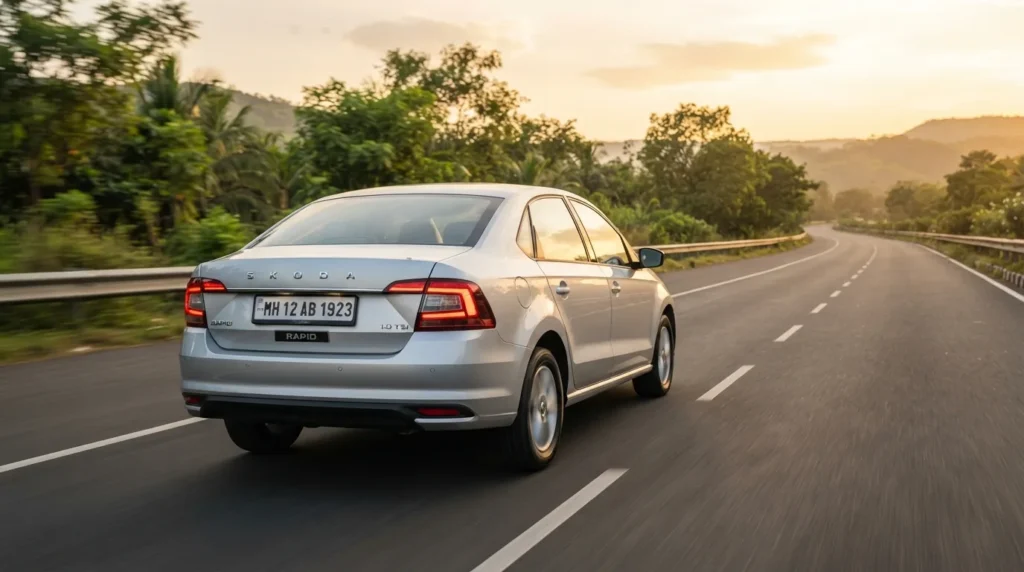
Before you finalize anything, go through this checklist: engine for oil leaks, turbo response on TSI and TDI variants, tyre wear patterns, suspension noise, brake condition, paint consistency, signs of past accident repair, chassis alignment, odometer authenticity, and all the paperwork RC, insurance, and service records. A professional pre-purchase inspection is money well spent here; it often catches issues a casual test drive won’t.
Is the Skoda Rapid Costly to Maintain?
Routine servicing is fair enough if the car has been looked after properly. But genuine parts and major repairs, DSG gearbox work, steering assembly replacement, and accident-related bodywork can cost noticeably more than what you’d pay on a comparable Japanese or Korean sedan. A well-maintained Rapid with a documented history keeps this risk to a minimum.
Wrapping Up
For anyone who values driving pleasure, sturdy build quality, and highway comfort over a feature-packed cabin, a used Skoda Rapid is still one of the better picks in 2026’s used car market. The 2020–2021 Rapid 1.0 TSI Style stands out as the best overall variant thanks to its efficient turbo-petrol engine and updated equipment list. Just don’t skip the service history check or the mechanical inspection. A little extra effort up front can save you from a much bigger repair bill down the road.