
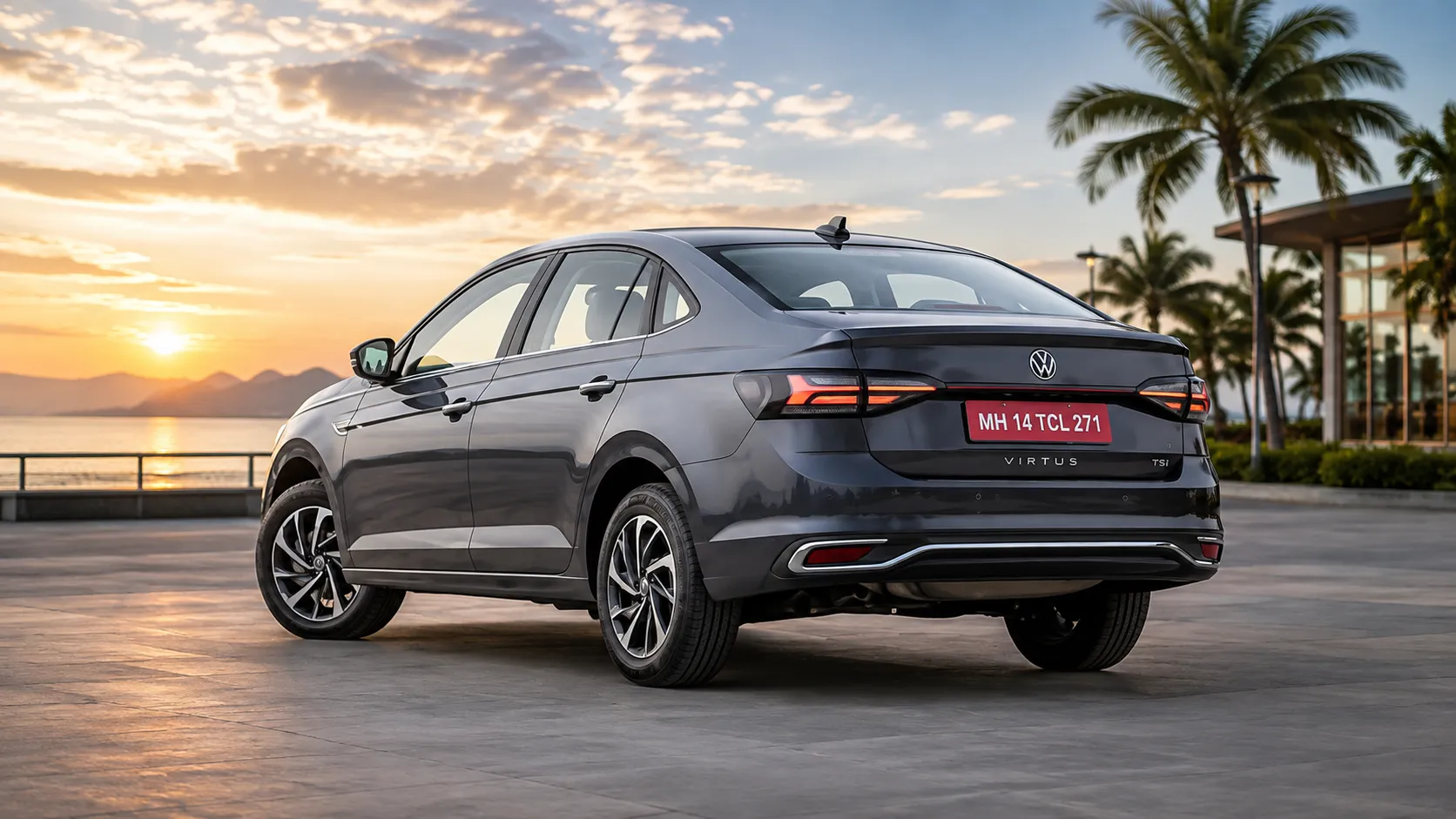
The Volkswagen Virtus has established itself as one of the most popular premium sedans in India, thanks to its sharp design, strong turbo-petrol engines and engaging driving experience. With the sedan segment becoming increasingly competitive, expectations are now building around a possible Volkswagen Virtus facelift. While Volkswagen has not revealed complete details yet, the updated model is expected to bring styling changes, more features and improvements to keep it relevant in the market.
Expected Design Changes
The Virtus already has a distinctive road presence, so Volkswagen is unlikely to make major changes to its overall shape. Instead, the facelift could receive a redesigned front fascia with updated LED headlamps, a revised grille and a sharper bumper.
New alloy wheel designs and updated exterior detailing could also be introduced. At the rear, minor changes to the bumper and tail-lamp detailing may give the sedan a fresher appearance. Volkswagen could also introduce new exterior colours to make the Virtus more appealing to younger buyers.
More Features Inside the Cabin
The current Virtus offers a well-equipped cabin, but the facelift could bring additional technology and convenience features. A larger or updated touchscreen infotainment system is one of the expected changes, along with improvements to the digital instrument cluster.
Volkswagen could also add features such as a 360-degree camera, connected-car technology, wireless Android Auto and Apple CarPlay, ventilated front seats and a more premium audio system on higher variants.
The company may also focus on improving the overall cabin experience with updated upholstery, new trim finishes and additional storage solutions.
ADAS Could Be a Major Addition
One of the biggest expectations from the Virtus facelift is the addition of advanced driver assistance systems. ADAS has become increasingly common in newer vehicles, particularly in the premium compact and midsize segments.
Volkswagen could introduce features such as adaptive cruise control, lane-keeping assist, autonomous emergency braking and forward collision warning. If offered, these systems would make the Virtus more competitive against newer rivals that are already moving towards higher levels of active safety technology.
Engine Options Likely to Continue
The Volkswagen Virtus is currently known for its turbo-petrol powertrains, and a facelift is unlikely to bring a major mechanical overhaul. The existing 1.0-litre and 1.5-litre turbo-petrol engines could continue, paired with automatic and manual transmission options depending on the variant.
The 1.5-litre TSI is particularly popular among enthusiasts because of its strong performance and quick-shifting DSG gearbox. Volkswagen could focus on improving refinement and efficiency rather than replacing the existing engines.
Expected Price and Rivals
If the facelift arrives in India, prices are expected to increase slightly over the current model due to additional features and styling updates. However, Volkswagen is likely to keep the Virtus positioned as a premium yet performance-focused sedan.
The updated Virtus would continue to compete with models such as the Hyundai Verna, Skoda Slavia, Honda City and Maruti Suzuki Ciaz. With SUVs dominating the Indian market, a feature-rich and stylish facelift could help Volkswagen maintain interest in the sedan segment.
What We Expect
The Volkswagen Virtus facelift is expected to follow an evolutionary approach rather than introducing a completely new design. Sharper styling, more features, improved safety technology, and the continuation of its turbo-petrol engines could make the updated sedan a stronger package.
For buyers who still prefer the driving dynamics and efficiency of a sedan over an SUV, the Virtus facelift could remain one of the most interesting options in its segment.
Also Read :- Skoda Kylaq Sportline vs Maruti Fronx Alpha AT: Turbo SUV Battle