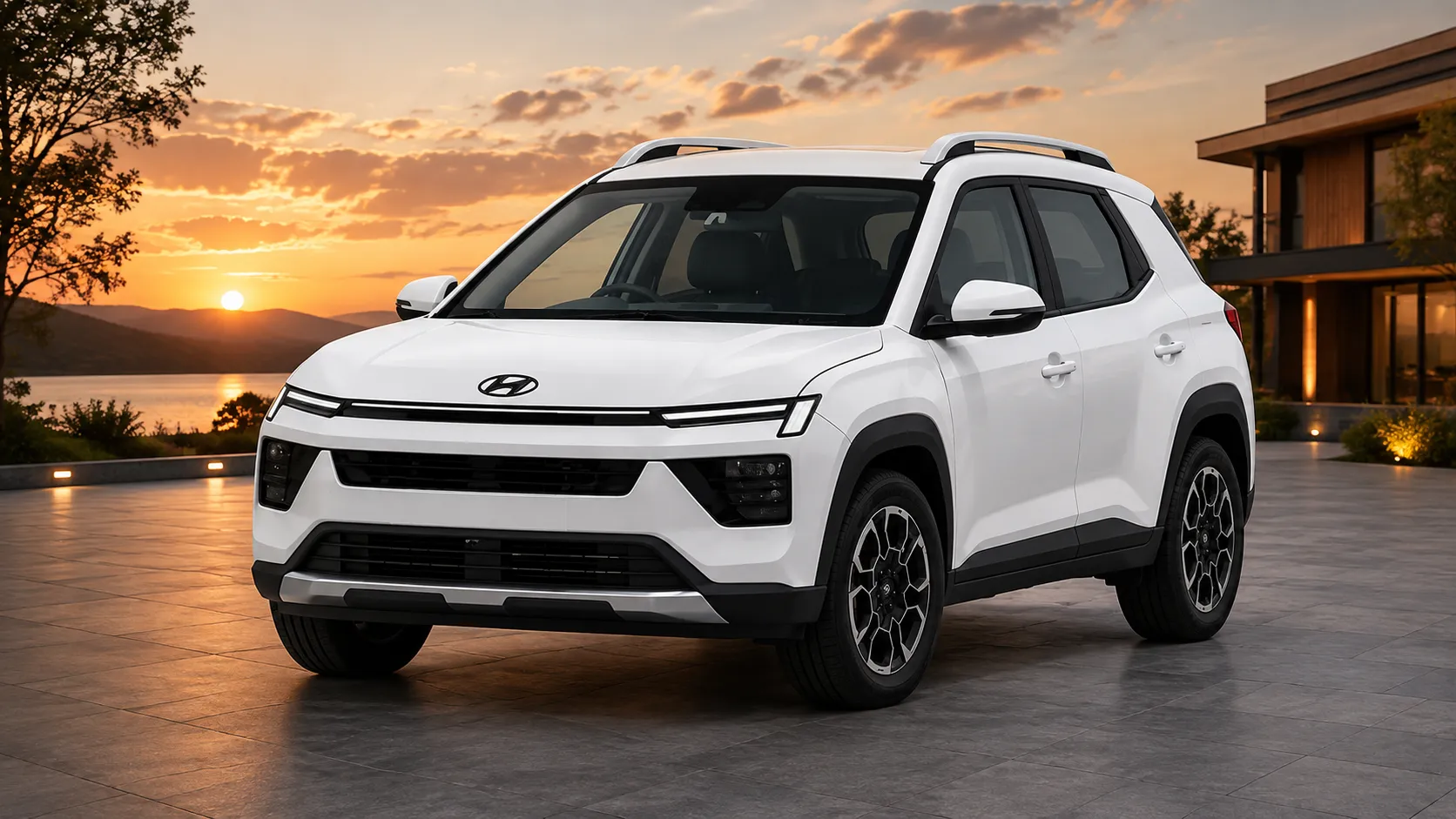
Hyundai is preparing to introduce the Bayon nameplate to a new market, adding another compact SUV to its growing global portfolio. While the company has confirmed the name, several details about the upcoming model are still awaited. The Bayon is expected to focus on urban buyers looking for a stylish, practical and feature-rich SUV in a compact footprint.
The Hyundai Bayon has already established itself in select international markets as a crossover positioned below larger Hyundai SUVs. For its upcoming iteration, expectations are centred around a more modern design, improved technology and a stronger focus on everyday usability. Hyundai is likely to retain the model’s crossover character while giving it a more distinctive road presence.
Expected Design and Exterior Updates
The Bayon is expected to receive a contemporary exterior featuring Hyundai’s latest design language. Slim lighting elements, a wider-looking front profile, and sharper body lines could help differentiate the SUV from conventional hatchbacks.
The compact dimensions should remain one of its key strengths. A relatively small footprint would make the Bayon suitable for city driving and tight parking spaces, while the SUV-inspired styling could appeal to buyers who want a more rugged-looking vehicle without moving into a larger segment.
Interior and Features
Inside, the Hyundai Bayon is expected to offer a modern cabin with an emphasis on connectivity and convenience. A digital instrument cluster, touchscreen infotainment system, smartphone connectivity and connected-car functions could form part of the package, depending on the market.
Hyundai may also offer features such as automatic climate control, wireless charging, a premium audio system, multiple USB ports and advanced driver assistance features on higher variants. Safety is expected to remain an important part of the package, with multiple airbags, electronic stability control and other active safety technologies likely to be available.
Expected Powertrain
Powertrain details for the new Bayon have not been fully confirmed. Depending on the market, Hyundai could continue with efficient petrol engines, while mild-hybrid technology may also play a role. The company is expected to prioritise a balance between fuel efficiency, smooth city performance and manageable ownership costs.
A range of transmission options could also be offered, potentially including manual and automatic choices depending on the market.
What Buyers Can Expect
The Hyundai Bayon is shaping up as a compact SUV aimed at buyers who prioritise styling, technology and practicality without wanting a large vehicle. Its biggest strengths could be its urban-friendly dimensions, modern design and feature-rich cabin.
More details about the Bayon’s specifications, equipment and market positioning are expected closer to its official debut. Until then, the compact SUV remains an interesting addition to Hyundai’s expanding SUV line-up, particularly for customers looking for a smaller alternative to conventional family SUVs.
Also Read :- Toyota Camry Price Hike: Up to Rs. 1.27 Lakh