
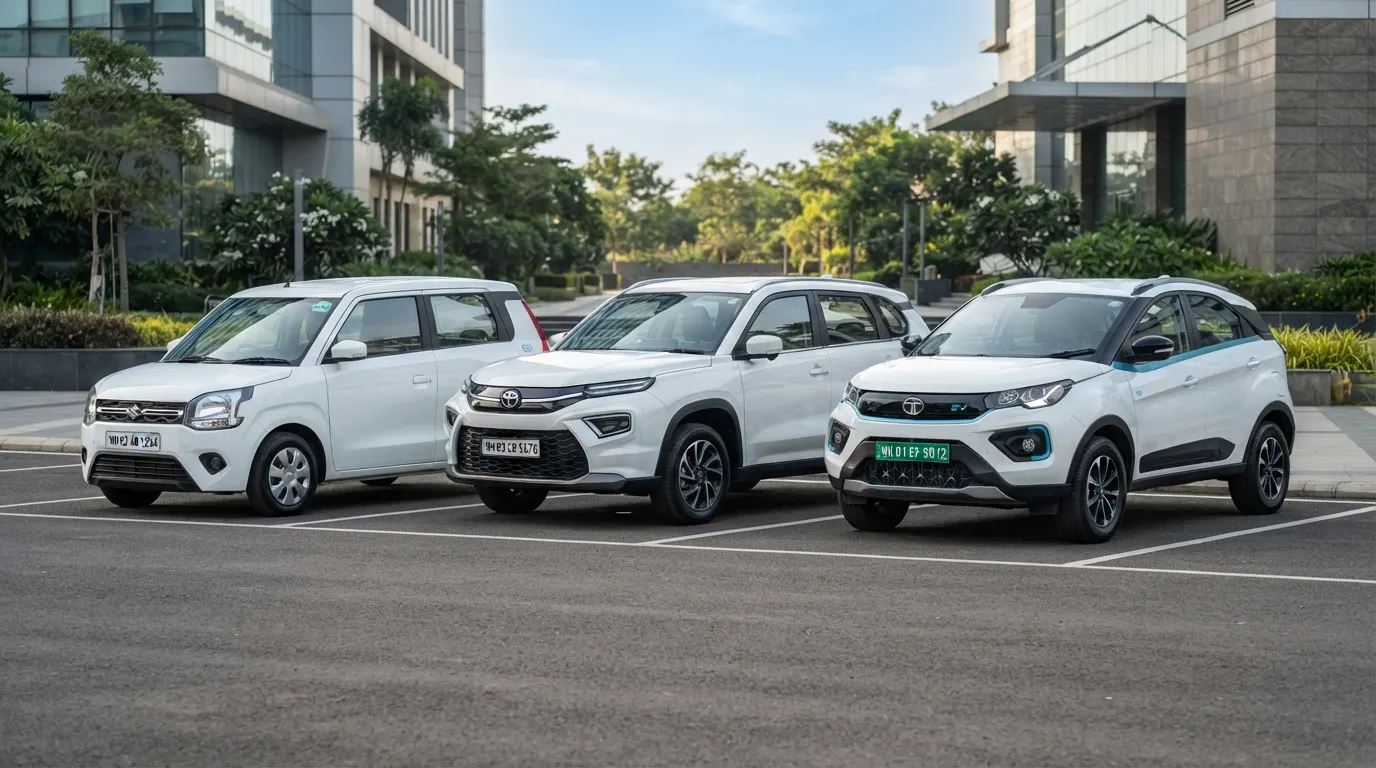
India’s car market just crossed a quiet but massive milestone. In June 2026, CNG, hybrid, and electric vehicles together made up nearly 40% of all passenger vehicles sold in the country. That’s not a small shift; it means four out of every ten new cars driven off a showroom floor last month ran on something other than plain petrol or diesel.
This isn’t a sudden spike either. It’s the result of a few years of steady change: rising fuel prices, better charging and CNG infrastructure, tighter emission rules, and simply more choice on the showroom floor. Buyers who once had one or two alternative-fuel options in their budget now often have five or six.
How the Numbers Break Down
Petrol still leads the pack by a wide margin, but its dominance is shrinking year after year. Diesel, meanwhile, continues its long decline and now barely registers as a mainstream choice.
| Fuel Type | Estimated Market Share (June 2026) |
|---|---|
| Petrol | Around 57–58% |
| Diesel | Around 2–3% |
| CNG + Hybrid + EV | Nearly 40% |
This is the highest combined share alternative fuel vehicles have ever held in the Indian passenger vehicle market.
CNG Is Still the Biggest Driver of This Shift
Of the three alternative fuel categories, CNG continues to pull the most weight, and it’s easy to see why. Running costs are dramatically lower than petrol, refueling stations are widely available in most cities now, and buyers get a full factory warranty instead of relying on risky aftermarket conversions.
Maruti Suzuki, Tata Motors, and Hyundai have all leaned into this demand, offering factory-fitted CNG variants across hatchbacks, sedans, and even SUVs. Some of the most popular models right now include the Maruti WagonR CNG, Maruti Brezza CNG, Maruti Dzire CNG, Tata Tiago iCNG, Tata Punch iCNG, and the Hyundai Exter Hy-CNG Duo. For anyone driving heavy monthly mileage, cab drivers, delivery riders, or families doing long daily commutes, CNG remains one of the most practical ways to cut fuel bills without switching to an EV.
Hybrids Are Winning Over Buyers Who Don’t Want to Deal With Charging
Strong hybrids have carved out their own loyal buyer base, people who want real fuel savings but aren’t ready to commit to plugging in a car every night. Since these vehicles charge themselves through regenerative braking and the petrol engine, there’s no dependency on charging infrastructure at all.
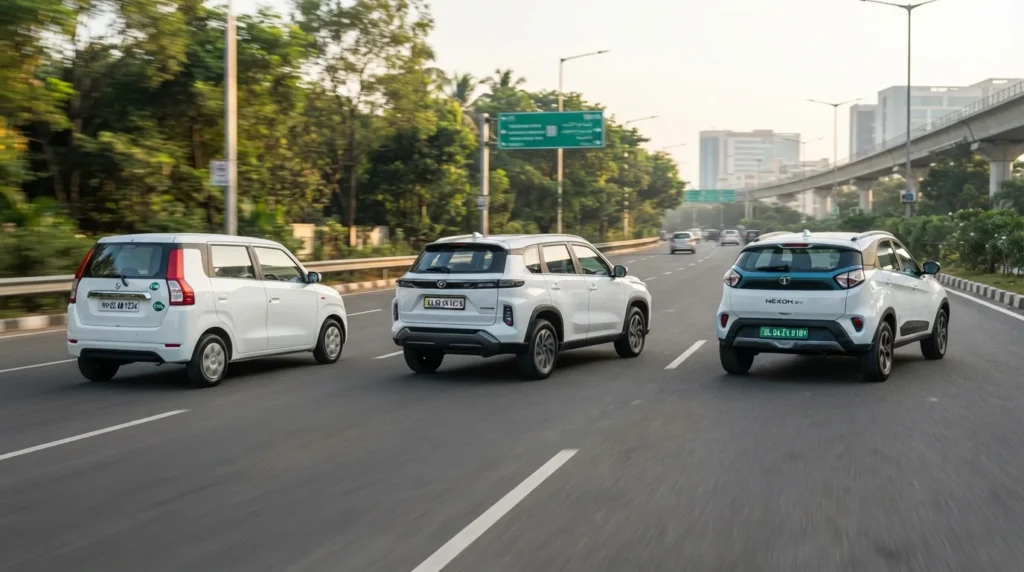
Models like the Toyota Hyryder Hybrid, Maruti Grand Vitara Strong Hybrid, Toyota Innova HyCross Hybrid, and Honda City e:HEV have become go-to choices, especially for city driving, where hybrids really shine in terms of mileage. As fuel prices keep climbing, more buyers are treating hybrid SUVs as a genuine alternative to petrol-only SUVs, not just a niche option.
EVs Are Growing Fast, Even If They’re Still the Smallest Slice
Electric vehicles still trail behind CNG and hybrids in total volume, but their growth rate tells a different story. Tata Motors, MG Motor India, Mahindra, BYD, and Hyundai are all pushing hard into this space, and it shows in the range and pricing of newer models.
Buyers today can choose from the Tata Nexon EV, Tata Punch EV, MG Windsor EV, Mahindra XEV 9e, Mahindra BE 6, and BYD Seal. A big reason EVs are becoming more practical is that several new launches now claim over 450 km on a single charge, which finally makes them viable for highway trips, not just city runs. Add in lower running costs, government incentives, and a fast-expanding charging network, and it’s clear why EV adoption keeps climbing.
Why Are Buyers Actually Making the Switch?
A few things are pushing this shift at the same time. Petrol and diesel prices remain high across most of India, which makes the long-term math favor CNG, hybrids, and EVs. Automakers have also widened their alternative-fuel lineups across price segments, so it’s no longer just premium buyers who have options; budget hatchback buyers do too. On top of that, CNG stations and EV charging points have both expanded significantly, easing the availability worries that used to hold buyers back. Government policy has played its part too, with emission norms and infrastructure investment nudging the market further in this direction.
What Should Buyers Actually Choose?
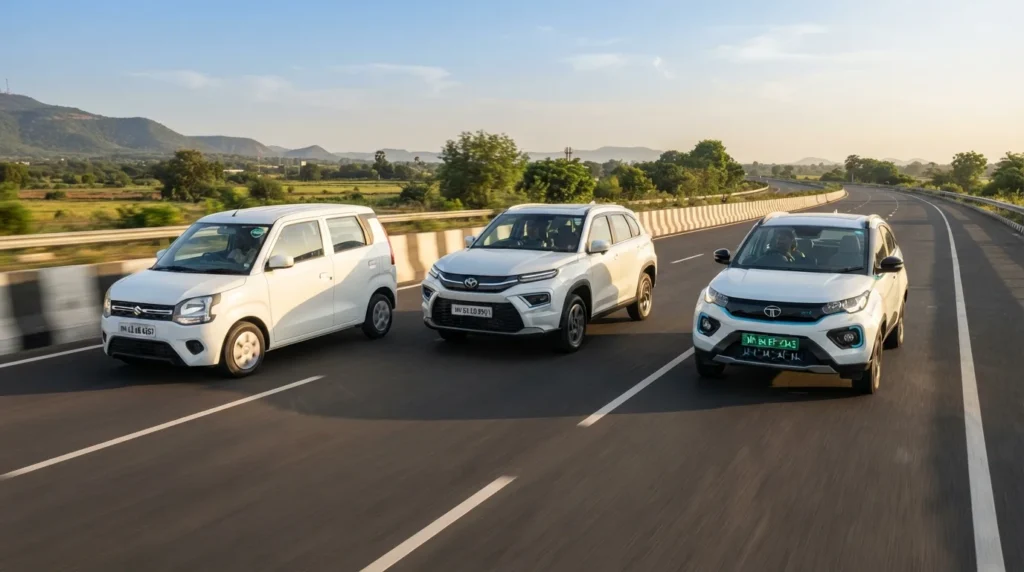
It really comes down to how you drive. If you’re clocking high monthly mileage and want the lowest running cost, CNG still makes the most financial sense. If you want strong fuel efficiency without ever plugging in, a hybrid is the easier fit. And if you’re an urban buyer with home charging access and a fairly predictable daily commute, an EV is becoming a genuinely attractive option, not just an experiment.
The Bigger Picture
Petrol cars still sell the most in absolute numbers, but the direction of India’s car market is unmistakable. With CNG, hybrid, and electric vehicles together capturing nearly 40% of passenger vehicle sales in June 2026, alternative fuel technology has clearly moved from “emerging trend” to “mainstream choice.” As infrastructure keeps improving and more affordable models arrive, this share is only likely to grow, giving Indian car buyers more choice, lower running costs, and a cleaner way to drive than ever before.