
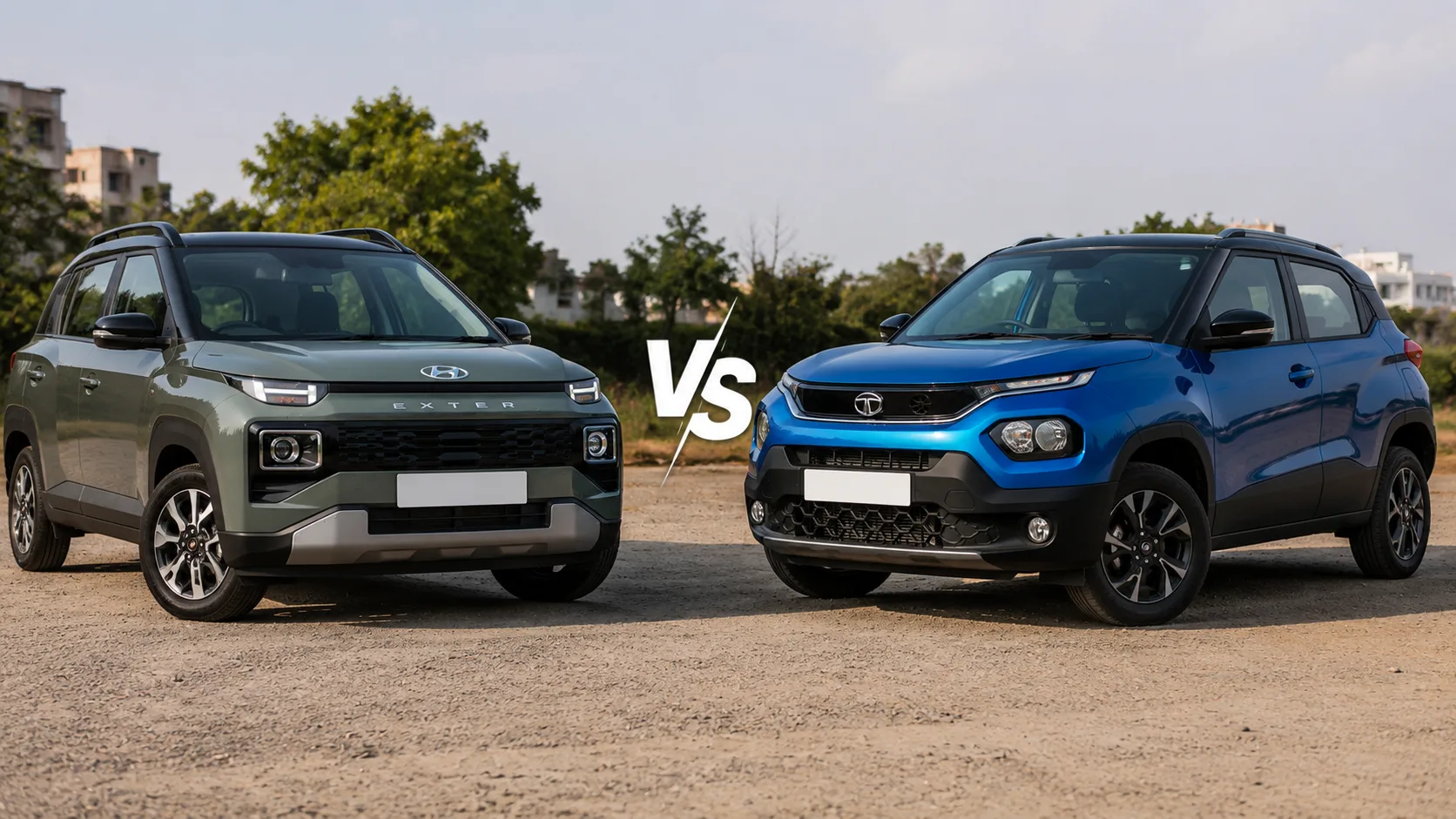
If you are in the market for a compact CNG SUV in 2026, the Hyundai Exter CNG and Tata Punch CNG are probably the two names you keep hearing. And for good reason — both have genuine SUV styling, factory-fitted CNG kits, and running costs that make a lot of financial sense. But they are not the same car, and the right choice really depends on how and where you drive.
Let me break it down simply.
Price
Neither car will break the bank, but there is a small gap.
| Model | Starting Ex-Showroom Price |
|---|---|
| Hyundai Exter CNG | ₹7.50 lakh |
| Tata Punch CNG | ₹7.30 lakh |
The Punch starts about ₹20,000 cheaper, which is not a huge difference but worth noting if you are working with a tight budget.
Engine and Performance
Both cars run a 1.2-liter petrol engine with CNG, paired with a 5-speed manual gearbox.
| Specification | Hyundai Exter CNG | Tata Punch CNG |
|---|---|---|
| Engine | 1.2L Petrol + CNG | 1.2L Petrol + CNG |
| Power (CNG mode) | 69 PS | 73 PS |
| Torque | 95 Nm | 103 Nm |
| Transmission | 5-Speed Manual | 5-Speed Manual |
The Punch has a slight edge on paper with more power and torque, and you actually feel it during highway overtakes. The Exter, on the other hand, has a noticeably smoother engine and a lighter clutch, which makes city driving less tiring over long hours.
Mileage
This is where most CNG buyers want clear answers.
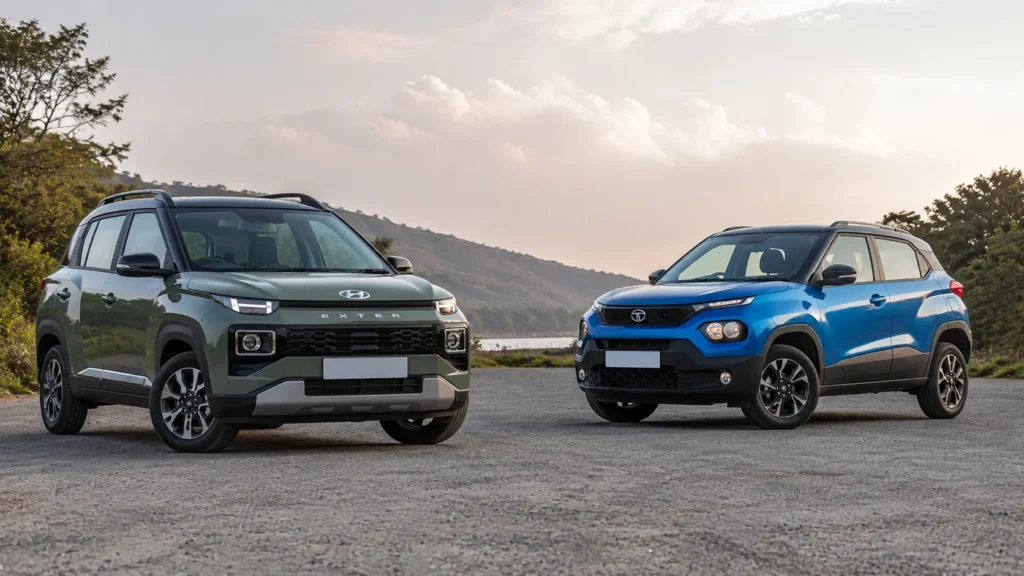
The Exter returns around 27.1 km/kg, and the Punch delivers approximately 26.99 km/kg as per ARAI figures. In real-world driving, both feel nearly identical. The Exter has a marginal advantage in stop-and-go city traffic due to its smoother power delivery.
Features
This is where the two cars take genuinely different directions.
The Hyundai Exter CNG comes with 6 airbags as standard across variants, an electric sunroof on higher trims, an 8-inch touchscreen, wireless Android Auto and Apple CarPlay, a built-in dashcam with dual cameras, and rear AC vents, all of which add real everyday value.
Tata Punch CNG goes bigger on the premium side with a 10.25-inch touchscreen, a digital instrument cluster, automatic climate control, wireless charging, and cruise control. It also carries an excellent 5-star Bharat NCAP safety rating, which is a serious credibility point.
Space and Practicality
Both cars use twin-cylinder CNG setups, which means boot space is far more usable than older single-tank CNG cars. Neither will disappoint for family grocery runs or weekend trips.
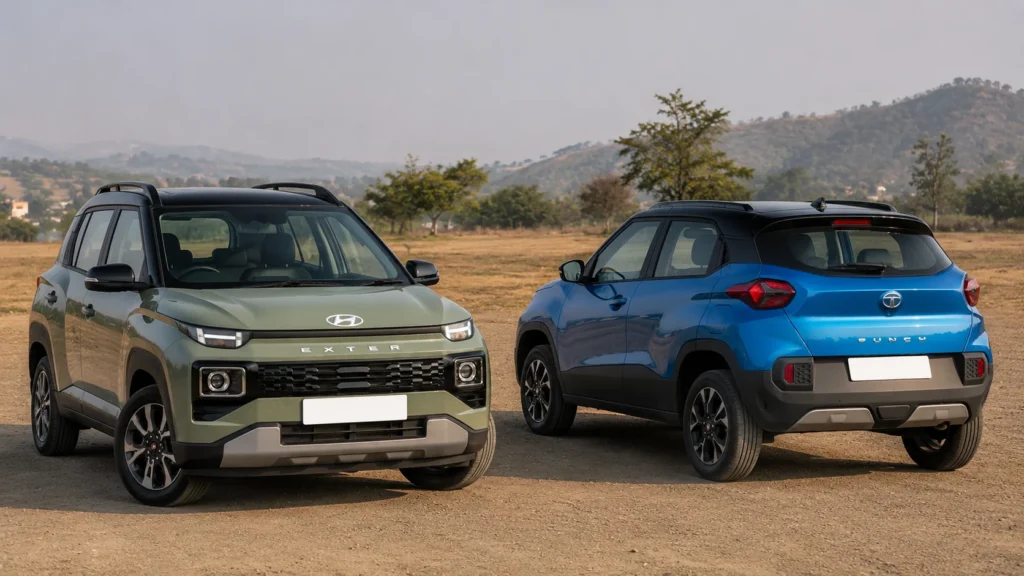
The Punch offers a slightly higher seating position, giving it that commanding SUV feel. The Exter feels more nimble and easier to park in tight city lanes.
Which One Should You Buy?
Go for the Hyundai Exter CNG if your driving is mostly urban, you want more convenience features out of the box, and standard 6-airbag safety matters to you.
Go for the Tata Punch CNG if you want stronger performance, a more premium cabin experience, and the confidence of a proven crash safety record on highways.
Our Take
Both the Hyundai Exter CNG and Tata Punch CNG are smart buys in 2026. The Exter wins on comfort, refinement, and city usability. The Punch wins on outright performance, interior quality, and highway capability. Neither is a wrong choice; it just comes down to what your daily driving actually looks like.