
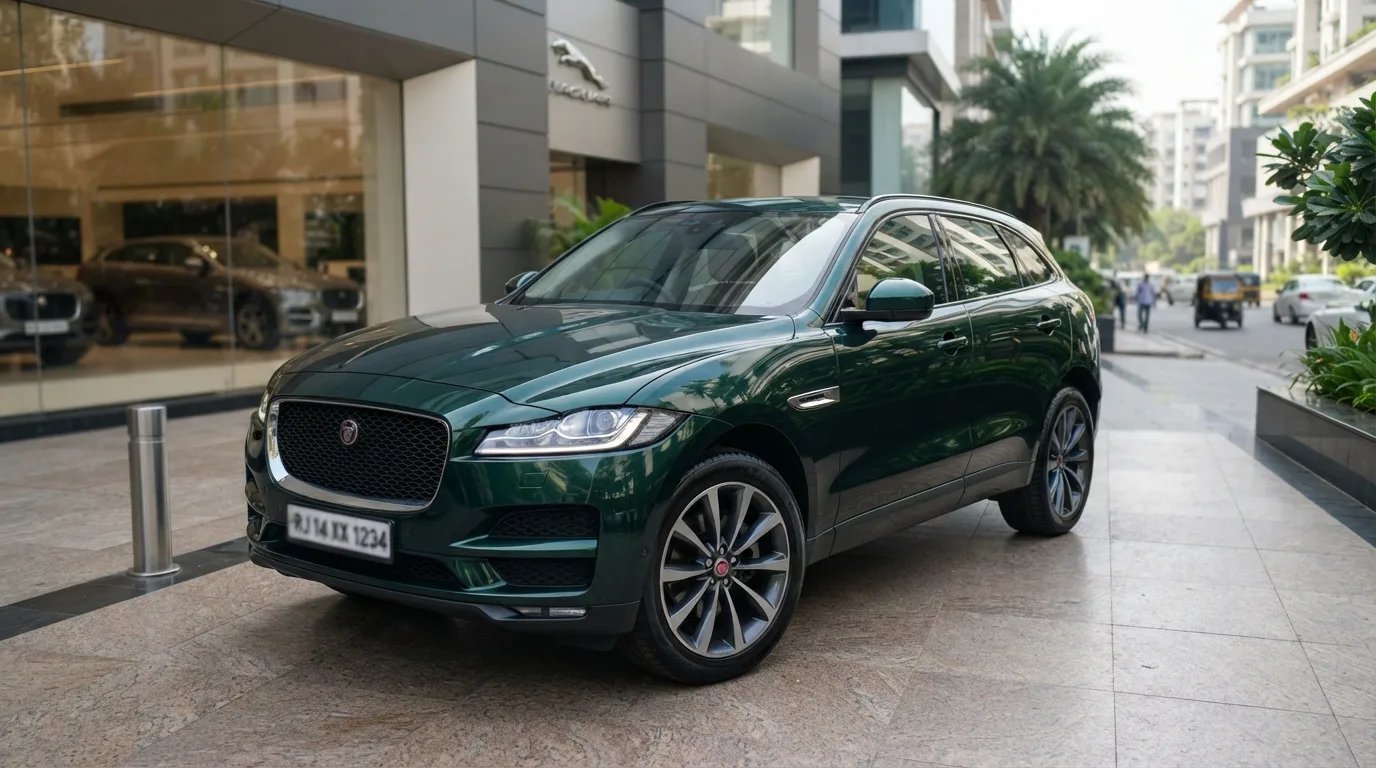
If you’ve ever priced out a Range Rover, a Bentley, or an Aston Martin in India, you already know the sticker shock isn’t really about the car, it’s about the tax on top of it. That’s about to change, at least for a limited number of buyers. The Indian government has opened applications for Tariff Rate Quotas (TRQs) under the India–United Kingdom Comprehensive Economic and Trade Agreement (CETA), a move that could bring down import duties on select British-built vehicles for the first time in years.
This is one of the first real, on-the-ground steps since the CETA deal was signed, and it’s a big one for anyone tracking India’s luxury car market. Brands like Jaguar Land Rover (JLR), Aston Martin, Bentley, McLaren, Lotus, MINI, and Rolls-Royce are all in line to benefit, though how much buyers actually save will depend on the fine print.
What Exactly Is the CETA Tariff Quota?
At its core, the India–UK CETA is a trade agreement designed to deepen economic ties between the two countries, and automobiles are one of the sectors it directly touches. Instead of scrapping import duties altogether, India has opted for a more cautious, phased approach: a limited quota system.
Here’s how it works in practice:
- A fixed number of UK-manufactured vehicles can be imported each year under the scheme.
- Vehicles within that quota qualify for a much lower customs duty than what’s normally charged.
- Once the yearly quota is used up, any further imports go back to paying the standard duty rate.
It’s a middle path. India gets to honour its trade commitments to the UK without throwing the door wide open to unrestricted luxury imports, which would put pressure on domestic manufacturing.
Why This Could Actually Move the Needle on Price
Import duties on fully built luxury cars in India are notoriously steep, often running well past 70% depending on engine size and how the vehicle is classified at customs. That single line item is usually the biggest reason a UK-built car costs so much more in Mumbai or Delhi than it does in London.
The table below breaks down how things could shift under the new quota system:
| Factor | Current Situation | Under the CETA Quota |
|---|---|---|
| Import Duty | High standard customs duty | Reduced preferential duty within quota |
| Vehicle Pricing | Significantly higher | Potentially lower retail prices |
| Availability | Normal imports, no cap | Limited to approved annual quota |
| Beneficiaries | All imports taxed equally | Only eligible UK-built vehicles |
That said, nobody should expect a flat, uniform discount across every model. The real savings will depend on the vehicle’s category, engine specification, customs classification, how the manufacturer decides to price it, currency movements, and shipping costs. Two cars from the same brand could see very different price adjustments.
Which Brands Stand to Gain
Quite a few British marques currently sell in India as Completely Built Units (CBUs), meaning they’re shipped over fully assembled rather than locally produced. These are the ones most likely to benefit directly:
- Jaguar
- Land Rover
- Aston Martin
- Bentley
- McLaren
- Rolls-Royce
- MINI (UK-built variants)
- Lotus
One important caveat: only vehicles actually manufactured in the UK, and that meet CETA’s rules-of-origin requirements, will qualify for the preferential duty. A model assembled elsewhere and merely badged British won’t make the cut.
What This Means for Indian Buyers
For someone genuinely in the market for an imported British luxury car, this policy shift opens up a few real possibilities.
Lower entry prices – With customs duty coming down for quota-eligible imports, manufacturers have more room to price competitively on select models.
Wider product availability – Variants that were previously shelved because high duties made them commercially unviable could now find their way to Indian showrooms.
More competition – As pricing becomes more flexible, brands may compete harder on value, which is generally good news for buyers.
Greater choice – A broader spread of UK-built models could become accessible within the annual quota window.
The Fine Print Buyers Shouldn’t Ignore
It’s worth staying realistic here. The quota is capped, so once it’s exhausted for the year, imports revert to the usual high duty. Not every model that gets cheaper cars built outside the UK, or assembled locally in India, qualifies for this benefit at all. And crucially, manufacturers aren’t obligated to pass on the full duty savings to customers; final pricing still comes down to business strategy, demand, and inventory planning.
The Bigger Picture for India’s Auto Industry
This isn’t a case of India throwing open its doors to imports. It’s a calculated, quota-based liberalisation that tries to balance two goals at once, strengthening trade ties with the UK while still protecting domestic manufacturers. Over time, it could also encourage UK brands to invest more in India, deepen technology partnerships, and expand their luxury offerings here. Meanwhile, domestic players in the premium segment will keep competing the way they always have: through local production, sharper pricing, and better features.
Industry watchers are, understandably, treating this as an administrative milestone rather than an overnight market shake-up. How things play out will hinge on how many quota applications get approved, the size of annual allocations, how enthusiastically manufacturers participate, actual consumer demand, and currency fluctuations.
Wrapping Up
India’s opening of applications for CETA tariff-rate quotas is a meaningful step in bringing the broader India–UK trade agreement to life. It won’t make every British car cheaper overnight, and the benefit is capped by quota limits, but for buyers eyeing select models, and for manufacturers eager to grow in one of the world’s fastest-expanding luxury car markets, this is a development worth watching closely over the coming months.