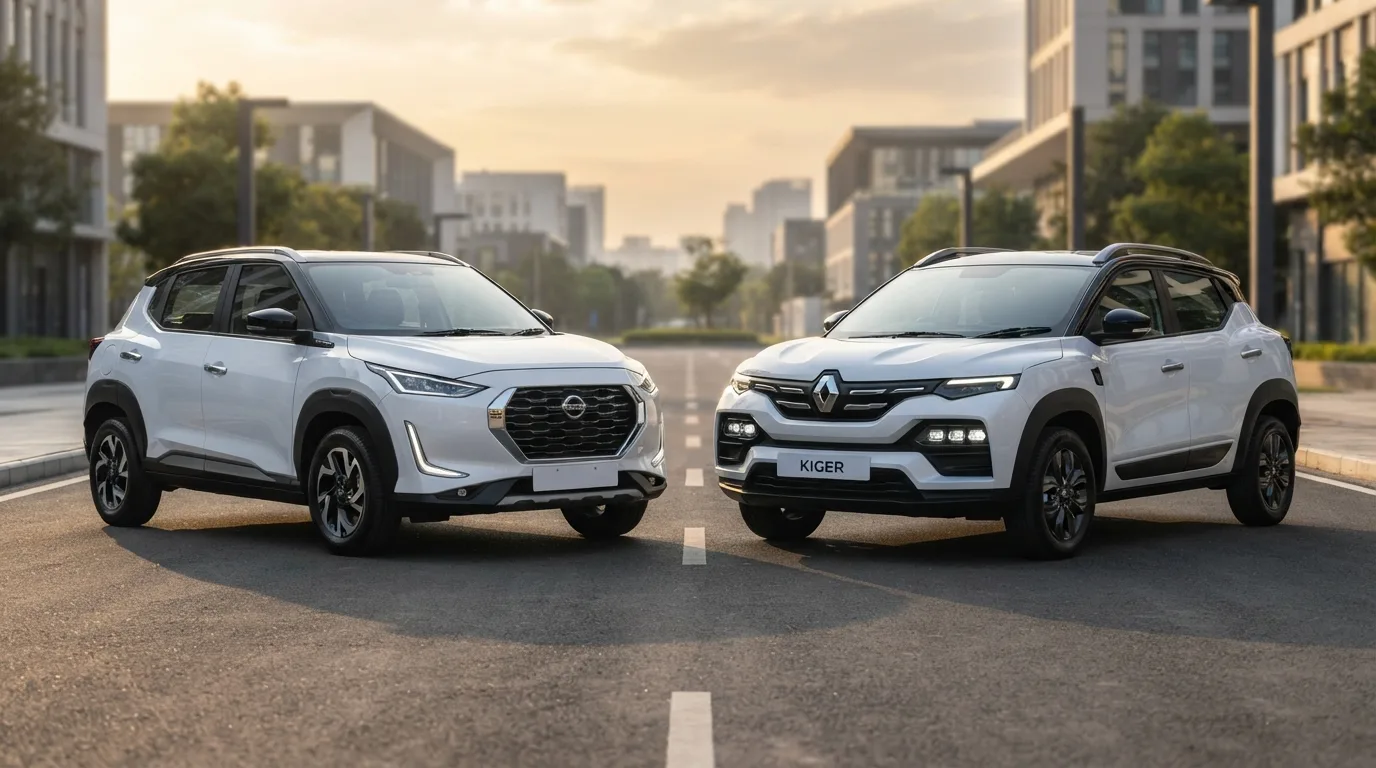
If you’ve spent even a weekend visiting showrooms for a compact SUV in India, you’ve probably noticed one thing: the Nissan Magnite and Renault Kiger keep coming up in the same breath. And that’s not a coincidence. Both cars are built on the same CMF-A+ platform under the Renault-Nissan Alliance; they share engines, they share a wheelbase, and on paper, they look almost identical. But once you actually sit inside both, drive them back to back, and compare what you get for your money, the differences start showing up in ways that matter to real buyers.
This comparison breaks down the Nissan Magnite vs Renault Kiger debate the way it should be looked at, not just specs on a brochure, but which one fits your daily life better.
Design: Premium vs Playful
The Magnite goes for a more grown-up look. Its large octagonal grille, sharp LED DRLs, and muscular body lines give it a slightly upscale road presence. It doesn’t scream for attention, but it holds its own next to SUVs priced higher.
The Kiger takes the opposite route. Split headlamps, a sculpted bonnet, roof rails, and a bolder bumper make it feel young and energetic. It’s the kind of SUV that appeals to first-time buyers who want their car to look a bit different from everything else on the road.
Neither is objectively “better” here; it genuinely comes down to whether you want your SUV to look mature or sporty.
Cabin Feel and Everyday Comfort
Step inside the Magnite and you’ll notice the dashboard layout feels a bit more finished, especially on the higher trims where soft-touch panels replace some of the harder plastics. The digital instrument cluster and steering wheel also feel a notch more premium.
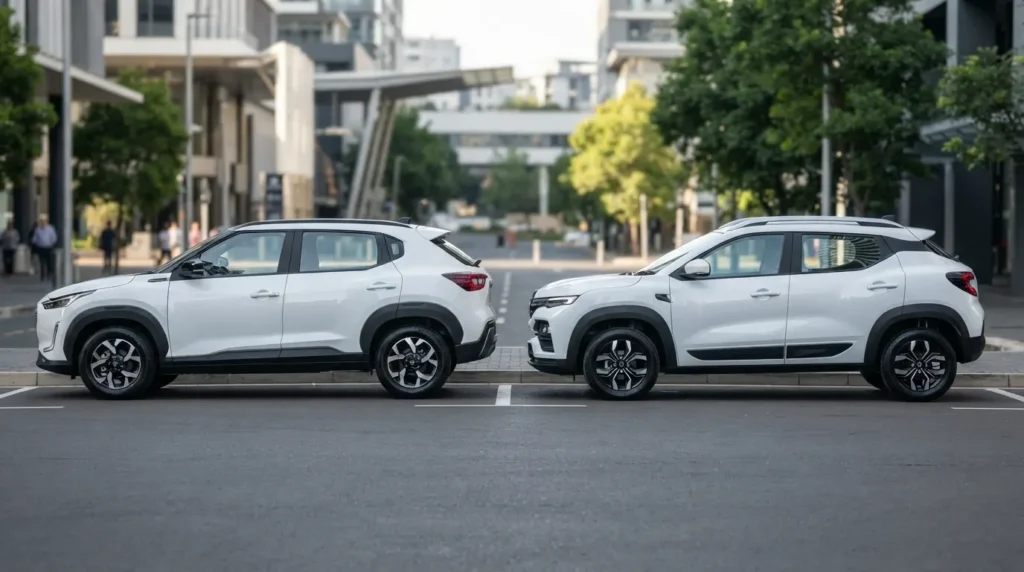
The Kiger’s cabin is more function-first. The upright dashboard and clever storage spots make it practical for daily use, though you will spot a bit more hard plastic if you go looking for it.
Where they’re nearly identical is rear-seat space. Since both cars share the same wheelbase, legroom and headroom for rear passengers come out almost the same good news if you’re regularly carrying three adults in the back.
Boot Space: Kiger Takes This One Clearly
This is where the Kiger pulls ahead in a way that’s hard to ignore.
| Feature | Nissan Magnite | Renault Kiger |
|---|---|---|
| Boot Capacity | 336 litres | 405 litres |
That’s nearly 70 litres more room in the Kiger, and it’s one of the largest boots in the entire segment. If you travel often with family and luggage, this alone could tilt the decision.
Engines: Identical on Paper
Both SUVs share the exact same engine lineup, so performance differences come down to tuning rather than raw output.
1.0L Naturally Aspirated Petrol — 72 PS, 96 Nm, available with a 5-speed manual or AMT. Fine for city commutes, but you’ll feel it running out of breath on highway overtakes.
1.0L Turbo Petrol — 100 PS, with 160 Nm on the manual and 152 Nm on the CVT. This is the engine that actually makes both these SUVs fun to drive, with noticeably better highway manners.
How They Drive
Since the engines are shared, straight-line performance is close. The real difference shows up in suspension tuning. The Magnite feels a little more planted at higher speeds with sharper steering feedback, making it a more confident highway companion. The Kiger, on the other hand, has a softer setup that soaks up bad roads better and feels easier to manage in stop-start city traffic.
Fuel Efficiency
| Variant | Magnite | Kiger |
|---|---|---|
| Petrol Manual | 18–20 km/l | 18–20 km/l |
| Turbo Manual | 18–19 km/l | 18–19 km/l |
| CVT | 16–18 km/l | 16–18 km/l |
Real-world mileage will vary based on how you drive, but on paper, both are equally efficient, which is a big reason both remain popular in this price bracket.
Features That Actually Matter
The Magnite’s biggest advantage here is its 360-degree Around View Monitor, which genuinely helps in tight parking spots, something rare at this price point. It also gets an 8-inch touchscreen, wireless Android Auto/Apple CarPlay, a wireless charger, cruise control, and automatic climate control.
The Kiger counters with its own solid list of 8-inch touchscreen, wireless connectivity, PM2.5 air filter, ambient lighting, wireless charger, and cruise control. It’s a well-equipped SUV, but it misses out on the all-around camera that the Magnite offers.
Safety
Both cars come with six airbags (variant dependent), ESC, hill start assist, traction control, ABS with EBD, rear camera and sensors, ISOFIX mounts, and a tyre pressure monitoring system. Neither compromises here, which is reassuring for anyone buying primarily for family use.
Price
| Variant | Nissan Magnite | Renault Kiger |
|---|---|---|
| Starting Price | Around ₹6.5 lakh | Around ₹6.3 lakh |
| Top Variant | Around ₹11.5 lakh | Around ₹11.3 lakh |
The Kiger has a marginally lower entry price, though the gap narrows once you start comparing similarly equipped variants.
So, Which One Should You Buy?
Go for the Nissan Magnite if you want a more premium look, a steadier highway drive, and that useful 360-degree camera for city parking.
Go for the Renault Kiger if boot space, ride comfort on rough roads, and sportier styling matter more to you, especially if you’re someone who travels often with a full boot.
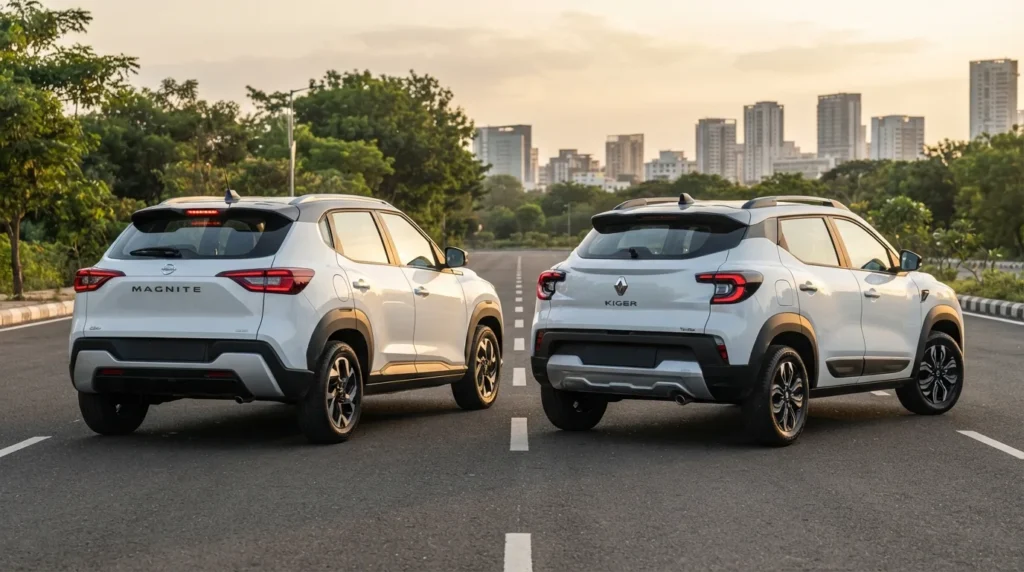
There’s no single “winner” here, and that’s exactly why this comparison keeps coming up among buyers. Both SUVs share the same DNA but end up serving slightly different priorities. If you lean toward tech and refinement, the Magnite edges ahead. If practicality and comfort top your list, the Kiger makes a genuinely strong case. Either way, in the compact SUV space in 2026, you’re not making a bad choice, you’re just picking the one that fits your life better.