
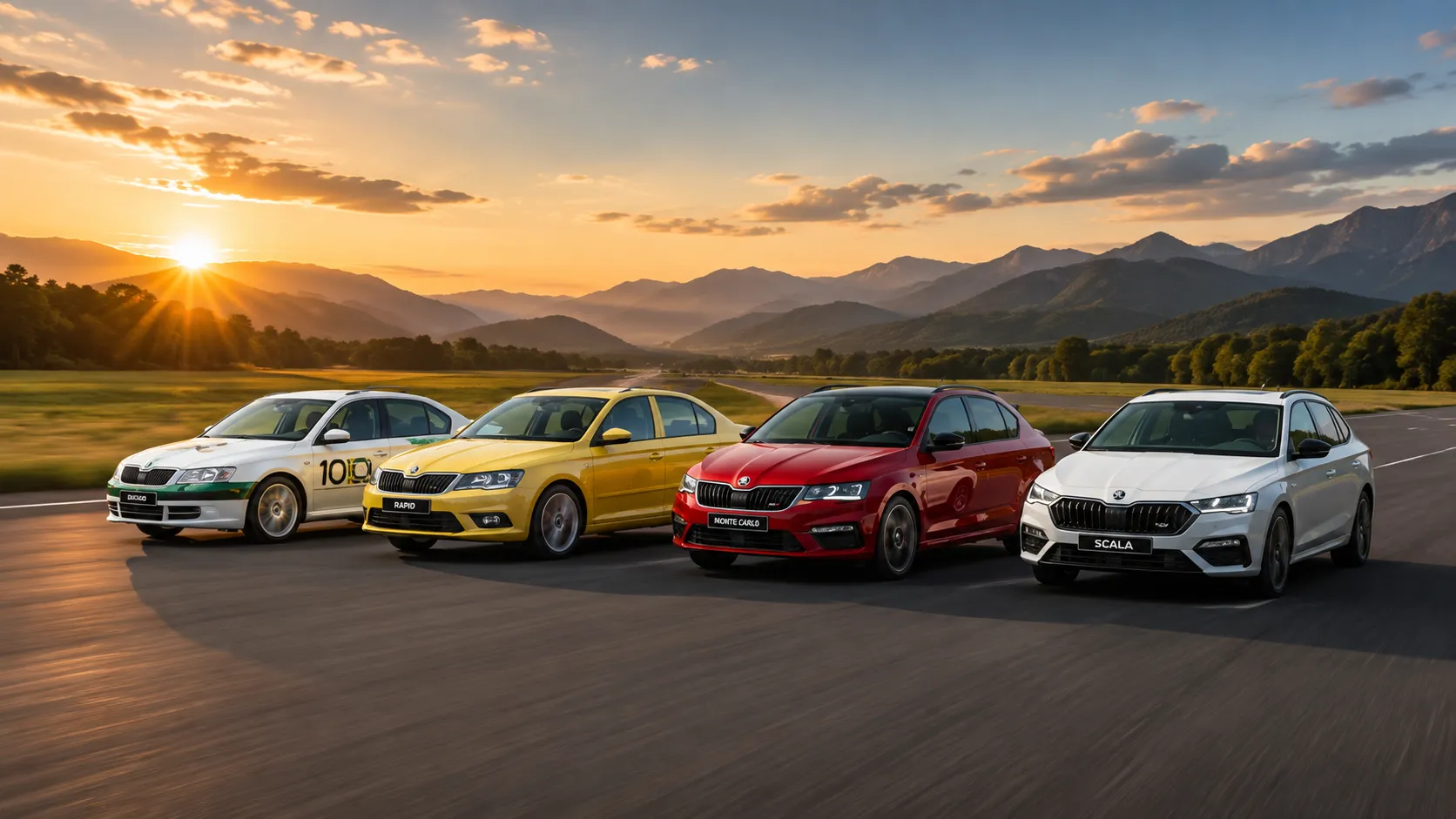
The Skoda Octavia has completed 30 years since its modern-era debut, marking three decades of one of the Czech automaker’s most important and successful nameplates. What began as a relatively practical family car in the 1990s gradually became a global model known for its spacious cabin, understated styling, strong engines and impressive value for money.
The Octavia name itself has a longer history. Skoda first used the name in the 1950s, but the modern Octavia arrived in 1996 as the company entered a new phase under Volkswagen Group ownership. The first-generation model was developed on the Group’s platform and helped Skoda move beyond its image as a budget-focused manufacturer.
From a Practical Family Car to a Global Success
The first modern Octavia was introduced as a liftback and was soon followed by a Combi estate version. Its large boot and practical cabin were among its biggest strengths, giving buyers considerably more usable space than the car’s exterior dimensions suggested.
The combination of simple design, solid build quality and competitive pricing quickly attracted customers across Europe and other international markets. The Octavia also helped establish Skoda as a serious mainstream carmaker rather than simply an affordable alternative to other Volkswagen Group brands.
Over the years, Skoda expanded the Octavia range with more powerful engines, higher equipment levels and performance-focused versions. The Octavia vRS became particularly popular among enthusiasts because it combined everyday practicality with stronger performance.
Four Generations of Evolution
The second-generation Octavia arrived in 2004 and brought a more modern design, improved interior quality and additional technology. It continued the formula of offering generous space without moving too far away from its value-oriented roots.
The third generation, launched in 2013, took the model further upmarket. It offered a larger cabin, more advanced safety features and a wider range of petrol and diesel engines. This generation also strengthened the Octavia’s position as a popular choice for families, company fleets and long-distance drivers.
The fourth-generation Octavia arrived in 2019 and introduced a sharper design along with a more technology-focused cabin. Depending on the market, buyers could choose from petrol, diesel, mild-hybrid and plug-in hybrid powertrains. The model also received more driver-assistance and connectivity features than previous generations.
Why the Octavia Became So Important for Skoda
The Octavia has played a major role in Skoda’s transformation. It offered many of the qualities customers expected from larger and more expensive cars while maintaining a relatively accessible price.
Its liftback body style has also been a major part of its appeal. It provides the visual appearance of a sedan but offers a large hatch-style opening, making it easier to load luggage and larger items. The estate version further improved practicality for families.
Another important factor has been the model’s broad international appeal. The Octavia has been sold in numerous markets and has served as a family car, fleet vehicle, taxi and even a performance model.
A Nameplate That Shaped Skoda
As the Octavia celebrates 30 years of its modern history, its importance to Skoda is difficult to overlook. The model helped change perceptions of the brand and became a key link between practicality, technology and value.
Although the automotive industry is rapidly moving towards electrification and software-driven vehicles, the Octavia’s core philosophy remains relevant: offer plenty of space, useful technology and comfortable everyday usability in a well-rounded package.
Three decades after its modern debut, the Octavia remains one of the defining models in Skoda’s history. Its evolution from a simple family car into a sophisticated global nameplate reflects not only the changes in the model itself, but also the remarkable transformation of Skoda over the past 30 years.
Also Read :- Maruti e-Vitara Prices Increased by Up to Rs. 20,000